1. Clinical Intent & Biomechanical Fundamentals of Trochanteric Antegrade Femoral Fixation
Femoral shaft fractures, subtrochanteric fractures, and combined neck-shaft injuries present some of the most complex mechanical challenges in orthopaedic trauma surgery. The selection of an optimal intramedullary device requires a strict balance between soft tissue preservation, anatomical contouring, torsional rigidity, and axial load sharing. Trochanteric Antegrade Femur Nails have emerged as the Gold Standard for proximal and mid-shaft femoral stabilization, replacing legacy piriformis fossa entry points with a trochanteric insertion trajectory that significantly decreases operative morbidity.
Historically, the piriformis fossa entry point was favoured for its direct alignment with the central medullary canal axis. However, clinical evidence over the past two decades demonstrates that piriformis insertion carries a substantial risk of iatrogenic damage to the main branch of the medial femoral circumflex artery, avascular necrosis (AVN) of the femoral head, and post-operative gluteus medius tendon disruption leading to abductor weakness and persistent limp.
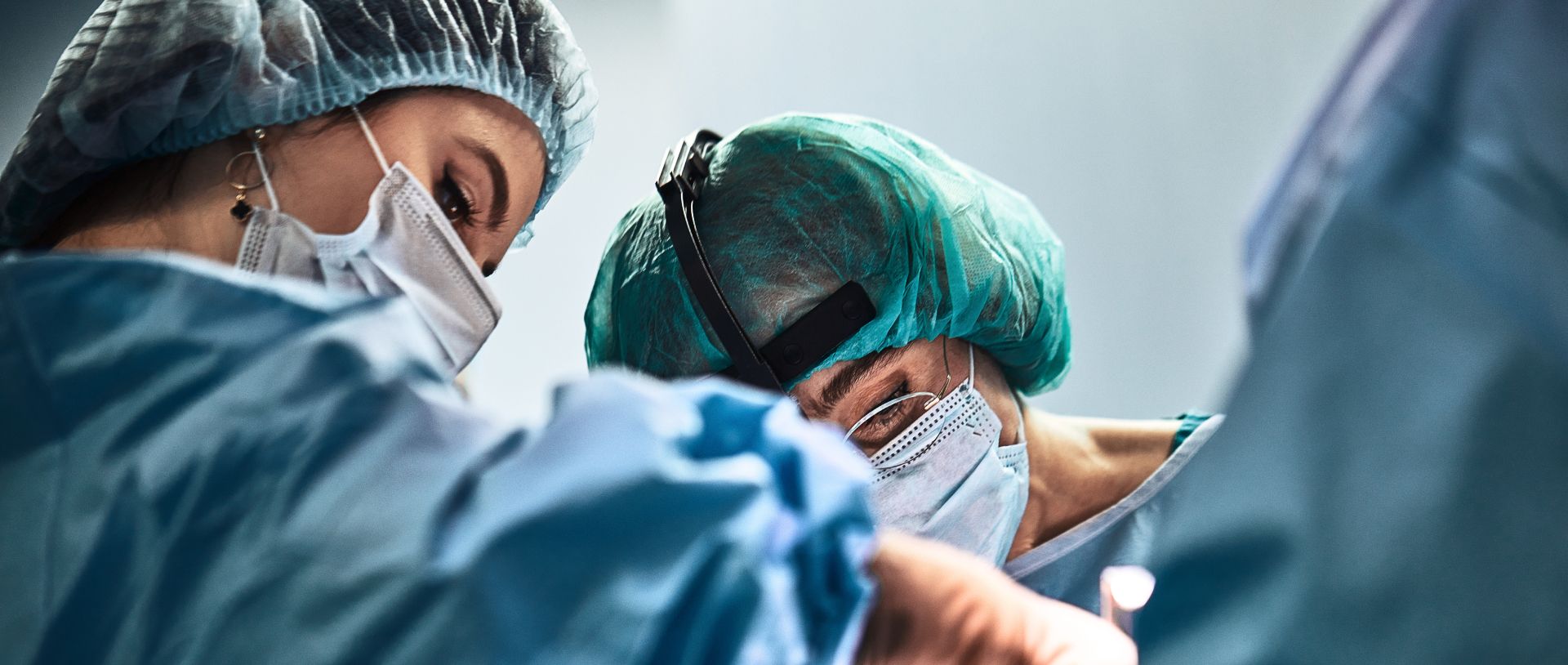
OIC Surgical Precision: High-efficiency instrumentation supporting rapid trochanteric entry and intraoperative alignment.
Key Biomechanical Principles of Trochanteric Entry
The trochanteric entry point—located at the apex of the greater trochanter or slightly lateral to it (typically 5° lateral proximal bend)—offers vital biomechanical advantages:
- Soft Tissue Preservation: Bypasses the critical musculotendinous insertions of the piriformis, obturator externus, and superior gemellus muscles, minimizing post-operative hip pain and abductor dysfunction.
- Vascular Integrity: Protects the retinacular vessels running along the femoral neck, dramatically reducing the risk of osteonecrosis of the femoral head.
- Anatomical Radius of Curvature (ROC): Modern Trochanteric Antegrade Femur Nails feature a anatomical anterior bow (typically 1.0m to 1.5m ROC) engineered to match the natural sagittal curvature of the human femur, eliminating anterior cortical impingement or distal perforation.
- Multi-Planar Proximal Locking: Allows versatile orientation of proximal recon screws into the femoral head for ipsilateral neck/shaft fractures, or standard transverse locking for isolated shaft fractures.
2. Product Recommendation: OIC Trochanteric Antegrade Femoral Nail System
The Orthopaedic Implant Company (OIC) offers a premium-grade, value-engineered Trochanteric Antegrade Femur Nail designed to meet the rigorous clinical standards of Level I trauma centers while adhering to a value-based pricing model that saves hospitals 50% to 60% compared to legacy brand equivalents.
Material Science & Biocompatibility
Forged from high-strength Titanium Alloy (Ti-6Al-4V ELI) complying with ASTM F136 standards. Delivers optimal fatigue strength, lower elastic modulus closer to native cortical bone to reduce stress shielding, and superior MRI compatibility.
Proximal & Distal Geometry
Features a 5° lateral valgus angle for effortless insertion through the greater trochanter tip. Available in proximal diameters from 11mm to 13mm and distal diameters from 9mm to 14mm in 1mm increments, covering both full-length and short nail configurations.
Anatomical Radius of Curvature (ROC)
Designed with a 1.5m anterior radius of curvature to prevent distal anterior cortical point-loading, ensuring smooth insertion and reducing the incidence of secondary distal fractures during reaming or insertion.
Dynamic & Recon Locking Modes
Supports dual-screw Reconstruction Mode (two 6.5mm cannulated recon screws into the femoral head) and Standard Antegrade Mode (single reconstruction lag screw with anti-rotation pin option), combined with static and dynamic distal slots for controlled fracture compression.
Elevate Your Trauma Line & Cut Implant Costs by 50–60%
Request comprehensive technical documentation, clinical biomechanical test reports, and volume pricing quotes today.
3. Global Procurement Trends in Orthopaedic Trauma Implants
Healthcare systems globally are undergoing a seismic shift in how surgical devices are evaluated, contracted, and integrated into clinical workflows. Historically, medical device purchasing in orthopaedics was driven primarily by surgeon preferences cultivated through high-cost sales rep networks and bloated marketing budgets. Today, global procurement officers, Integrated Delivery Networks (IDNs), and Group Purchasing Organizations (GPOs) rely on evidence-based data, standardized quality audits, and total cost of care analytics.
Value-Based Healthcare Alignment: Uniting clinical excellence with sustainable hospital cost structures.
Key Drivers Shaping the Future of Femoral Nail Procurement
-
The Rise of Value-Based Healthcare (VBC):
Hospitals facing fixed reimbursement structures (DRGs, bundled payments) can no longer absorb 400% to 600% gross margins on standard trauma hardware. Procurement teams actively seek high-quality "Tier-1 equivalent" implants that remove unnecessary sales rep commission structures without sacrificing implant engineering integrity.
-
Supply Chain Resilience and Direct-to-Hospital Logistics:
Post-pandemic supply disruptions highlighted vulnerabilities in regional medical device distribution. Global buyers prioritize manufacturers with streamlined, direct supply chains, localized consignment stocks, transparent lead times, and robust stock-keeping units (SKUs).
-
Standardization of Surgical Instrumentation:
Hospitals are moving away from proprietary, overly complex instrumentation sets that increase Central Sterile Services Department (CSSD) processing costs. Modular, intuitive targeting arms and streamlined tray configurations reduce turnaround times in the Operating Room and lower sterilization costs per case.
-
Shift Toward Ambulatory Surgical Centers (ASCs):
Outpatient trauma procedures and elective hip/femur fixations in ASC settings demand cost-effective implant inventory with low holding costs, making transparently priced intramedullary systems the preferred option for surgical directors.
4. Technological & Clinical Development Trends in Femoral Nailing
The field of intramedullary osteosynthesis is evolving beyond simple mechanical stabilization. Research and development teams are integrating advanced manufacturing, digital guidance, and biological optimization into next-generation Trochanteric Antegrade Femur Nails.
1. Additive Manufacturing & Porous Surface Modifications
3D printing technology (Electron Beam Melting and Direct Metal Laser Sintering) enables the creation of gradient porous structures on the proximal metaphysical portion of intramedullary nails. These trabecular titanium surfaces promote early bony ingrowth and osseointegration at the entry portal, enhancing rotational stability in severely osteoporotic subtrochanteric fractures.
2. Electromagnetic & Radiation-Free Distal Targeting
Fluoroscopic exposure during free-hand distal locking remains a major occupational hazard for surgical teams. Emerging trends feature real-time electromagnetic (EM) sensor tracking embedded within the distal targeting assembly, allowing surgeons to achieve perfect distal locking screw alignment without radiation exposure or repeated C-arm shots.
3. Patient-Specific Anatomical Matching & Smart Telemetric Nails
Big-data-driven morphometric analysis of global population femoral canals is refining nail geometry. Future iterations of trochanteric nails will feature customizable radii of curvature and proximal neck-shaft angles derived from pre-operative CT datasets. Furthermore, bio-telemetric strain gauges embedded within the nail core are being piloted to track real-time fracture healing, weight-bearing compliance, and early non-union detection via smartphone telemetry.
5. Why Leading Global Hospitals Partner with OIC for Trauma Fixation
At the Orthopaedic Implant Company (OIC), we pioneered the concept of Value-Based MedTech. We believe high-quality healthcare shouldn't come at an inflated cost. By eliminating unnecessary overhead, expensive sales representative subsidies, and excessive marketing budgets, we deliver FDA-cleared, clinically proven implants identical in performance and material science to legacy brands—at prices 50% to 60% below market average.

Patient-Centered Outcomes: Enabling complete functional restoration through uncompromised implant quality.
The OIC Advantage for Trochanteric Antegrade Femur Nails:
- FDA Cleared & ISO 13485 Certified: Manufactured in state-of-the-art facilities under strict ISO 13485:2016 quality management systems and FDA 21 CFR 820 compliance. Our implants undergo rigorous mechanical fatigue testing, static bending, and pullout resistance protocols.
- Intuitive, Ergonomic Instrumentation: Carbon-fiber radiolucent targeting arms, self-holding screwdrivers, and color-coded reamers ensure seamless OR integration. Surgeons transition to OIC systems with zero learning curve.
- Empowering Surgical Autonomy: Surgeons retain complete freedom to utilize premium titanium trauma systems while fulfilling hospital supply chain mandates for cost containment and fiscal responsibility.
- Global Distribution & Regulatory Support: Fully equipped to support hospital networks, government tenders, and international distributors with technical dossiers, certificates of free sale, and comprehensive clinical evaluation reports (CERs).
6. Frequently Asked Questions (FAQ) for Procurement Officers & Surgeons
Q1: What anatomical factors determine the choice of Trochanteric Antegrade Nailing over Piriformis Nailing?
Trochanteric entry is clinically indicated in patients with obese habitus, narrow piriformis fossae, soft tissue compromise around the posterior hip, or when minimizing operative time is crucial. It protects the medial femoral circumflex artery branches, decreasing AVN risk and preserving the abductor tendon complex compared to piriformis approaches.
Q2: How does OIC maintain a 50–60% cost reduction without compromising implant quality?
OIC operates on an efficient, value-based business model. We utilize the same premium medical-grade titanium (Ti-6Al-4V ELI) and precision Swiss machining as legacy manufacturers. Our cost savings stem from eliminating costly sales rep commissions, direct-to-hospital supply chains, lean operations, and modern digital customer support tools.
Q3: Are OIC Trochanteric Antegrade Femur Nails compatible with standard OR fluoroscopy and C-arm equipment?
Yes. The OIC targeting instruments feature carbon-fiber radiolucent proximal guide arms that provide unobstructed AP and lateral fluoroscopic visualization during guide wire placement, proximal recon screw insertion, and distal locking.
Q4: Can this system be used for ipsilateral femoral neck and shaft fractures?
Absolute agreement. The OIC Trochanteric Antegrade Femur Nail includes dual-mode proximal locking options. In Reconstruction Mode, two parallel 6.5mm cannulated recon screws are directed into the femoral head to securely stabilize ipsilateral femoral neck fractures alongside the femoral shaft fracture.
Q5: What regulatory certifications accompany the OIC femoral nail system for international tenders?
Our complete intramedullary nail portfolio holds US FDA 510(k) clearance, ISO 13485:2016 quality certification, and complies with international medical device directives suitable for registration in Latin America, Asia-Pacific, the Middle East, and European regulatory jurisdictions.
Q6: What is the turnaround time for international procurement orders and evaluation sets?
We maintain comprehensive inventory at our main logistics hubs. Evaluation trays and surgical demo kits can be dispatched within 48 to 72 hours, while bulk procurement orders are fulfilled in accordance with custom logistics agreements tailored to hospital purchasing schedules.
7. Request Technical Dossiers & Hospital Procurement Quotes
Transform your institution's orthopaedic trauma economics while maintaining world-class surgical standards. Contact our dedicated trauma supply specialists to request product samples, anatomical CAD models, surgical technique guides, or custom pricing schedules.