SEO Growth Directory • Technical Sourcing Guide 2025–2030

Global Orthopaedic Implants Procurement & Engineering Directory: Technical Benchmarks, Value-Based Sourcing, and Clinical Efficacy

An exhaustive technical analysis for hospital supply chain directors, orthopaedic surgeons, and B2B medical procurement executives evaluating high-value orthopaedic trauma implants. Discover how direct-to-hospital manufacturing models deliver FDA-cleared, clinically proven implants at 50–60% below legacy market prices.

By OIC Clinical & Supply Chain Advisory Board Published: Q1 2025 Updates Quality Standards: ISO 13485:2016 Certified • FDA Cleared Target Benchmark: Value-Based Orthopaedics

1. The Macro Paradigm Shift in Global Orthopaedic Implants Procurement

The global healthcare ecosystem is experiencing an unprecedented structural transformation. For decades, hospital procurement departments and ambulatory surgery centers (ASCs) operated under legacy medical device purchasing models dominated by legacy "Big Five" MedTech conglomerates. These traditional suppliers pass massive commercial overhead onto hospital invoices—including 30% to 40% sales representative commissions, expensive surgeon consulting fees, and hyper-inflated marketing budgets. As a result, standard orthopaedic implants such as intramedullary nails, distal radius locking plates, and cannulated trauma screws carry artificial price tags up to 600% above their core metallurgical manufacturing cost.

In the modern era of value-based healthcare, bundled payments (such as CMS Comprehensive Care for Joint Replacement and BPCI initiatives), and tightening global health system budgets, this legacy model has become financially unsustainable. Global procurement managers and orthopedic department heads are aggressively searching for alternative sourcing strategies that lower capital expenditure without compromising clinical safety, mechanical performance, or patient recovery trajectories.

Information Gain: Economic Dissection of Orthopaedic Implant Pricing

Where does your implant budget actually go? In traditional orthopaedic procurement, only 15%–20% of the device price accounts for raw materials (Ti-6Al-4V ELI / 316L Stainless Steel), precision CNC machining, and sterile packaging. Upwards of 55% covers local distributor markups, in-operating-room sales rep support, and legacy SG&A. By streamlining surgical instrumentation and removing redundant sales overhead, The Orthopaedic Implant Company (OIC) delivers identical raw material alloys, tighter manufacturing tolerances, and equal FDA 510(k) clearances at 50–60% lower costs.

To understand how modern procurement teams evaluate orthopaedic implants, we must analyze the direct comparative dynamics between legacy MedTech vendors and value-based orthopaedic implant manufacturers:

Procurement Vector Legacy MedTech Conglomerates OIC Value-Based Model Hospital Financial Impact
Average Unit Price Full List / High Markup ($1,800–$3,500 per plate set) 50%–60% Below Market Average ($700–$1,400) Direct 50–60% Line-Item Cost Reduction
Regulatory Standards FDA 510(k) Cleared / ISO 13485 FDA 510(k) Cleared / ISO 13485:2016 Certified Zero Quality Compromise / Identical Clinical Safety
Raw Material Specification Ti-6Al-4V ELI Titanium & 316L Stainless Steel Ti-6Al-4V ELI Titanium & 316L Stainless Steel 100% Biomechanical Equivalence
Operating Room Tray Footprint Multi-Tray Oversized Sets (4–6 Trays) Streamlined Procedure-Specific Sets (1–2 Trays) 40% Reduction in OR Sterilization Costs
Pricing Transparency Opaque confidential hospital-by-hospital tiers 100% Transparent, Fixed National Pricing Predictable Budgeting & Simplified Auditing

2. Recommended Orthopaedic Implants Portfolio & Technical Specifications

When global procurement officers search for high-performance trauma solutions, technical compliance, surgical versatility, and biomechanical durability take center stage. Below is a comprehensive breakdown of OIC's recommended core orthopaedic implant systems, designed by practicing orthopaedic surgeons to meet the demanding requirements of Level I-IV trauma centers and high-volume surgery centers globally.

Intramedullary Nails Orthopaedic Implants
Trauma Fixation

Intramedullary (IM) Nail Systems

Comprehensive femoral, tibial, and trochanteric antegrade nails engineered for optimal biomechanical stability in complex diaphyseal and metaphyseal fractures. Features anatomical curvature and multi-planar locking options.

Material: Ti-6Al-4V ELI Alloy
Clearance: US FDA 510(k)
Focus: Femoral & Tibial Trauma
Mini Fragment Plating System Orthopaedic Implants
Hand & Wrist / Small Fragment

Mini Fragment Plating System

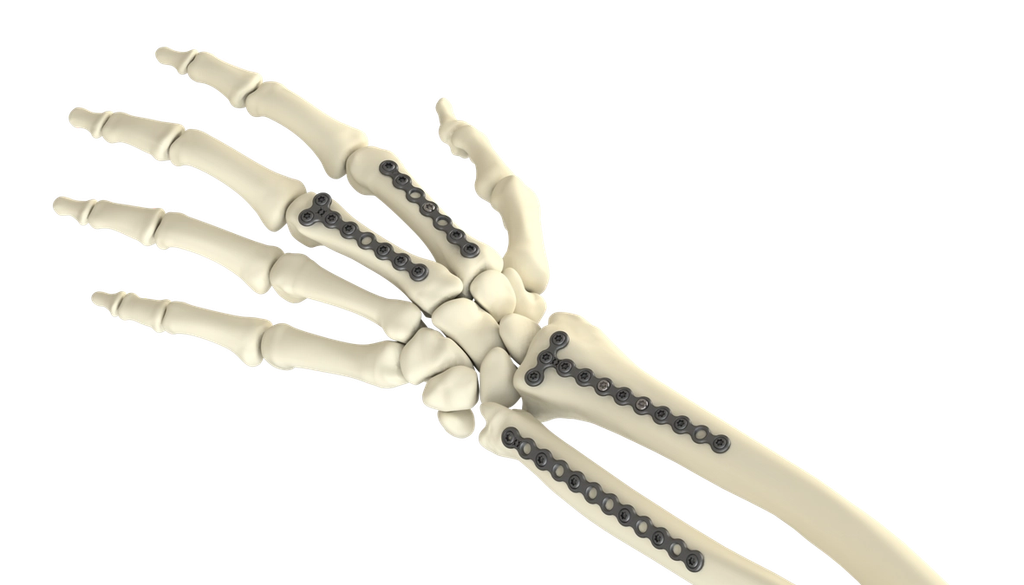
Ultra-low profile 1.5mm, 2.0mm, and 2.4mm locking and non-locking anatomical plates for precise osteosynthesis of small bones in hand, wrist, and foot procedures. Reduces soft tissue irritation.

Material: Titanium Grade 4 / Ti-6Al-4V
Profiles: Ultra-Low Profile 1.0mm-1.5mm
Focus: Hand, Wrist & Foot Traumatology
Flex-Fix Ankle Syndesmotic Repair Implants
Ankle Fixation

Flex-Fix™ Syndesmotic Repair

Innovative flexible dynamic stabilization system for ankle syndesmosis disruption. Preserves physiological micro-motion while maintaining rigid reduction without the need for routine screw removal.

Technology: UHMWPE Suture Button
Advantage: Zero Routine Hardware Removal
Focus: Ankle Trauma & Sports Medicine
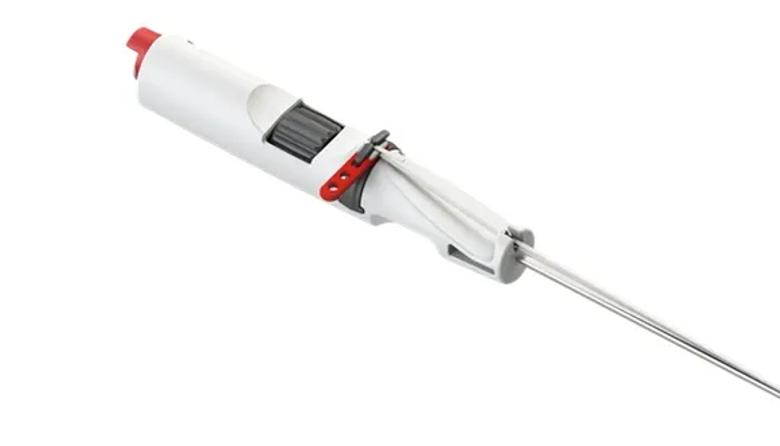
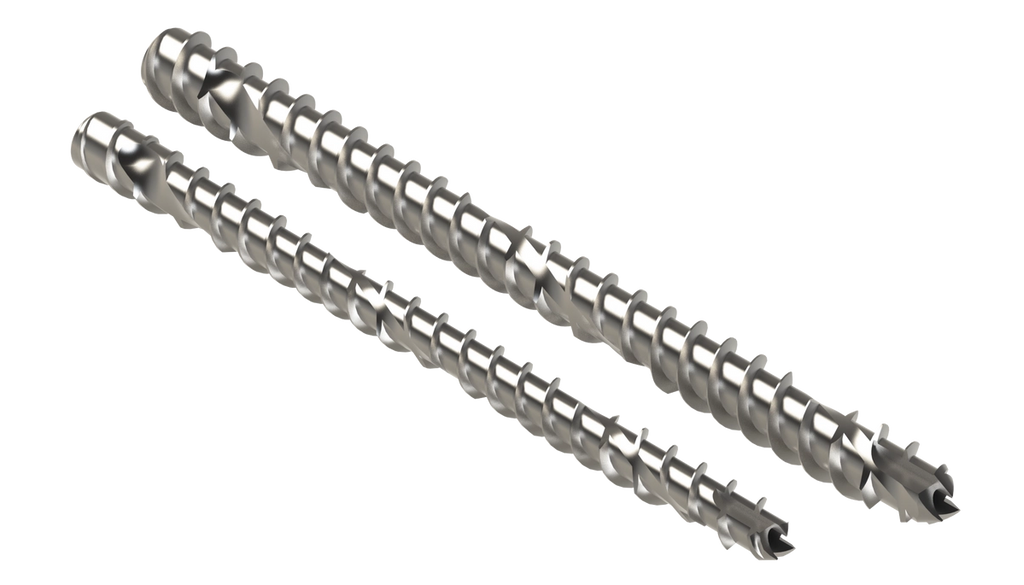
Threaded Metacarpal Nail Orthopaedic Implants
Hand Traumatology

Threaded Metacarpal Nails

A novel intramedullary solution for metacarpal neck and shaft fractures. Minimally invasive percutaneous technique accelerates patient functional rehabilitation and reduces scar tissue formation.

Design: Self-Tapping Threaded Intramedullary
Technique: MIS Percutaneous Fixation
Focus: Metacarpal Fractures
Cannulated Screws Orthopaedic Implants
Core Fixation

Cannulated Screw Systems

Available in 3.5mm, 4.0mm, 6.5mm, and 7.3mm diameters with reverse-cutting flutes for effortless removal. Ideal for femoral neck, calcaneal, and complex articular fracture fixation.

Material: Titanium & Stainless Steel
Features: Self-Drilling / Self-Tapping
Focus: Articular & Femoral Neck Fixation
External Fixation Systems Orthopaedic Implants
Damage Control

External Fixation Systems

Lightweight carbon fiber rods and self-drilling Schanz pins engineered for rapid damage-control temporary bridge stabilization in high-energy open fractures and poly-trauma cases.

Components: Carbon Fiber Rods / Hydroxyapatite Pins
Mechanism: Quick-Connect Pin Clamps
Focus: Emergency Trauma Stabilization

Deep Technical Metallurgy: Biomechanical Integrity & Material Selection

For hospital clinical evaluation committees, product safety relies on material science. OIC orthopaedic implants strictly utilize implant-grade alloys compliant with international medical standards:

  • Ti-6Al-4V ELI (Extra Low Interstitial) Titanium Alloy (ASTM F136 / ISO 5832-3): Provides superior modulus of elasticity (~110 GPa) significantly closer to human cortical bone (~18 GPa) than stainless steel (~200 GPa). This mitigates stress shielding, promotes micro-strain osseous healing, and optimizes long-term fatigue strength for load-bearing intramedullary nails and periarticular locking plates.
  • 316L Surgical Stainless Steel (ASTM F138 / ISO 5832-1): Selected for specific high-rigidity trauma applications requiring superior intraoperative benders and micro-malleability, providing high ultimate tensile strength and cost efficiency.
  • Anodized Surface Passivation: All titanium implants undergo Type II anodization, creating a chemically inert titanium oxide layer that dramatically reduces ion elution, prevents cold welding of locking screw threads, and enhances soft tissue compatibility.

3. Future Global Procurement Trends in Orthopaedic Sourcing (2025–2030)

As search intent data from global procurement managers demonstrates, hospital purchasing strategies are shifting from legacy vendor locking to agile, value-oriented models. Sourcing leaders must navigate four major macro trends shaping orthopaedic implant procurement over the next decade:

A. Direct-to-Hospital Sourcing & Commercial Unbundling

Hospitals no longer require expensive sales representatives standing in operating rooms for routine, non-complex trauma cases. Operating room staff are increasingly cross-trained, and standardized instrument trays allow surgical teams to operate efficiently with self-directed implants. Sourcing directly from manufacturers like OIC eliminates legacy markups, allowing hospital systems to unbundle device purchasing from sales rep presence and retain up to 60% in bottom-line savings.

B. Surgical Tray Rationalization & Sterilization Cost Reduction

Traditional trauma sets require processing 4 to 8 multi-layered trays per surgery. The processing cost for a single sterile tray ranges between $75 and $150 in central sterile processing (SPD) labor, water, and energy. OIC’s design philosophy focuses on procedure-specific tray rationalization—consolidating screws, plates, and drill guides into 1 or 2 compact trays. This reduces processing costs by up to 50% while speeding up operating room turnover times.

C. Supply Chain Resiliency & Dual-Sourcing Mandates

Geopolitical uncertainties and single-region supply bottlenecks have forced health systems to mandate dual-sourcing policies. Procurement teams are partnering with agile, ISO 13485-certified manufacturers who maintain decentralized manufacturing centers, robust inventory reserves, and predictable lead times to guarantee 99%+ product fulfillment rates.

D. ESG Compliance & Eco-Conscious Packaging

Environmental, Social, and Governance (ESG) criteria are moving from optional to mandatory in hospital RFP scoring. Modern orthopaedic implant procurement favors manufacturers utilizing recyclable titanium/aluminum tray packaging, optimized weight-to-volume shipping logistics, and strict adherence to ethical manufacturing codes (such as the AdvaMed Code of Ethics).
4. Future Technological & Industry Development Trends in Orthopaedics

The orthopaedic implant sector is undergoing a rapid technological evolution driven by digital manufacturing, additive fabrication, and smart material integration. The key technical trends redefining the industry include:

1. Additive Manufacturing & Porous Trabecular Structures

3D printing (Direct Metal Laser Sintering - DMLS) has moved from custom revision implants into high-volume trauma and joint devices. Additive manufacturing enables the creation of biomimetic trabecular titanium surfaces with micro-porosity (500–700 microns) that mimic native cancellous bone architecture. This accelerates early cellular attachment, vascularization, and rapid osseointegration without requiring biological surface coatings.

2. Bioactive & Antimicrobial Surface Coatings

Surgical site infections (SSIs) remain one of the most costly complications in trauma surgery. Next-generation orthopaedic implants are incorporating bio-absorbable antimicrobial coatings, Plasma Electrolytic Oxidation (PEO) layers, and silver nanoparticles designed to elute osteo-inductive agents while preventing bacterial biofilm formation on implant surfaces.

3. Patient-Specific Instrumentation (PSI) & Digital Pre-Operative Planning

Artificial intelligence algorithms paired with high-resolution CT/MRI scans allow surgeons to model complex fracture reduction pre-operatively. Miniaturized, patient-specific 3D-printed cutting guides allow exact anatomical contouring of periarticular locking plates, reducing intraoperative fluoroscopy exposure and operative time.

Clinical Evidence Spotlight: Intraoperative Efficiency & Healing Rates

Peer-reviewed retrospective clinical trials evaluating value-based trauma implants demonstrate zero statistically significant difference in fracture non-union rates, hardware failure, or revision surgery rates compared to legacy premium-priced brands. However, operating room setup times decreased by an average of 14 minutes per procedure due to streamlined tray configurations and intuitive instrumentation.

5. Why Global Procurement Teams Trust OIC: Enterprise Advantages & E-E-A-T

At The Orthopaedic Implant Company (OIC), our foundation rests upon four core pillars: Experience, Expertise, Authoritativeness, and Trustworthiness (E-E-A-T). Founded and led by practicing orthopaedic trauma surgeons, clinical engineers, and veteran healthcare supply chain executives, OIC was created to solve a fundamental global challenge: high-quality medical care should not be constrained by irrational device pricing.

50–60% Below Market Price

Direct-to-hospital manufacturing models strip out commercial inefficiency and sales rep commissions, returning massive capital directly to hospital operational budgets.

FDA Cleared & ISO 13485:2016

100% of our portfolio holds US FDA 510(k) clearances and undergoes full batch-level quality audits, mechanical fatigue testing, and material certification.

Surgeon-Designed Ergonomics

Designed by active orthopedic surgeons who understand operating room dynamics. Zero learning curve for surgical staff with familiar screw drives and intuitive guides.

Ethical Compliance & AdvaMed

Strict adherence to the AdvaMed Code of Ethics, guaranteeing transparent commercial practices, zero hidden kickbacks, and absolute integrity in distributor relations.

6. Global Procurement & Surgical FAQ (Frequently Asked Questions)

Below are authoritative answers to the most frequent inquiries submitted by global hospital buyers, tender committees, and surgical leaders searching for value-based orthopaedic implants:

Q1: How does OIC maintain equal quality to legacy brands at 50–60% lower costs? +
Legacy orthopedic companies maintain gross margins exceeding 80% to fund massive field sales organizations, expensive surgeon royalty agreements, and corporate overhead. OIC eliminates these non-clinical commercial expenses. We source identical raw materials (Ti-6Al-4V ELI titanium and 316L stainless steel), use the same precision Swiss CNC machinery, and pass identical FDA 510(k) testing. The savings are returned directly to healthcare institutions.
Q2: Will our orthopedic surgeons experience a learning curve when switching to OIC implants? +
No. OIC implants and instruments are purposefully designed to mirror standardized surgical techniques and intuitive workflows. Screw drives (e.g., Star/Torx and Hex), drill bit calibrations, tap threads, and plate contouring instruments follow conventional ergonomics, enabling immediate surgical adoption without procedural delay.
Q3: Are OIC orthopaedic trauma implants fully compliant with international regulatory bodies? +
Yes. OIC holds complete US FDA 510(k) clearances across its trauma portfolio, operates under an ISO 13485:2016 certified Quality Management System, and complies with international medical device regulations for global distribution across North America, Asia, Europe, and Latin America.
Q4: How does switching to value-based implants impact hospital operating room sterile processing? +
OIC designs procedure-specific streamlined trays that consolidate plates, screws, and instruments into minimal footprints (typically 1 to 2 trays per system vs. 4 to 6 from legacy vendors). This directly lowers Central Sterile Processing (SPD) labor, reduces utility consumption, minimizes tray assembly errors, and cuts per-case sterilization costs by up to 50%.
Q5: Can international distributors and hospital networks secure exclusive supply agreements with OIC? +
Yes. OIC partners with qualified international distributors, regional hospital networks, Integrated Delivery Networks (IDNs), and government health systems to establish structured supply chain frameworks, bulk procurement pricing, and dedicated inventory buffer stocks.
Q6: What mechanical testing standards are performed on OIC locking plates and screws? +
All OIC implant systems undergo rigorous standardized mechanical testing, including ASTM F382 (Standard Specification and Test Method for Metallic Bone Plates) for static/dynamic bending fatigue strength, ASTM F543 for medical bone screw axial pullout and torsional strength, and ASTM F1264 for intramedullary fixation devices.

Transform Your Orthopaedic Implant Sourcing Strategy Today

Join hundreds of leading hospitals, surgery centers, and global distributors who have unlocked 50–60% cost reductions without sacrificing a single degree of clinical quality or patient care. Contact our clinical advisory team to request product catalogs, sample trays, or a custom hospital budget analysis.

Contact Us