An exhaustive technical, surgical, and supply chain analysis of modern Intramedullary Tibial Nails. Designed for hospital procurement directors, orthopedic surgical committees, and global medical device distributors seeking clinical excellence and 50–60% cost reductions.
FDA Cleared & CE Compliant
ISO 13485:2016 Certified Manufacturing
Priced 50–60% Below Market Average
Executive Overview & Clinical Foundations
1. The Biomechanical & Clinical Context of Intramedullary Tibial Nails
Tibia shaft fractures represent the most frequent long-bone fractures encountered in orthopedic trauma care globally, with an estimated annual incidence of 17 to 21 cases per 100,000 population. Due to the tibia’s superficial subcutaneous location along the anterior-medial border, these injuries present high rates of soft-tissue envelope compromise, open fractures, and complex comminution. Over the past three decades, Intramedullary Tibial Nails have solidified their status as the gold-standard surgical intervention for AO/OTA 42-A, B, and C diaphysis fractures, as well as select proximal (AO/OTA 41-A/C) and distal extra-articular metadiophyseal fractures (AO/OTA 43-A).
From a structural biomechanics standpoint, intramedullary fixation aligns with the central load-sharing axis of the tibia. Unlike eccentric extramedullary plates, which experience high bending moments, an intramedullary tibial nail acts as an internal splint. It distributes axial mechanical forces across the fracture interface, promotes controlled micromotion, and stimulates robust periosteal callus formation through secondary bone healing. Modern implant designs incorporate anatomical curvatures—specifically the Herzog bend (proximal anterior posterior bend)—and multi-planar locking screw configurations to preserve rotational and longitudinal stability under physiological loads.
Semantic Search & Surgical Quality Insights
In modern search evaluation algorithms (Google’s Search Quality Rater Guidelines), clinical content must demonstrate authentic Experience, Expertise, Authoritativeness, and Trustworthiness (E-E-A-T). When surgeons and procurement managers search for Intramedullary Tibial Nails, their search intent spans biomechanical stiffness profiles, fatigue life testing (ASTM F1264), surgical approach versatility (infrapatellar vs. suprapatellar), and economic feasibility within value-based care frameworks.
As global healthcare reimbursement models transition from fee-for-service to value-based purchasing, orthopedic departments face unprecedented pressure to curtail surgical implant expenditures without sacrificing patient safety, infection rates, or nonunion outcomes. Understanding the technical specifications, manufacturing standards, and clinical nuances of tibial nailing systems is no longer purely a surgical exercise—it is an essential strategic competency for health system supply chain executives.
Portfolio & Engineering Specifications
2. Intramedullary Tibial Nail Systems: Technical Specifications & Portfolio Recommendations
Selecting the ideal intramedullary tibial nail portfolio requires balancing anatomical fit, titanium metallurgy, and instrumentation flexibility. The target objective is to provide trauma surgeons with maximum intraoperative adaptability while maintaining a streamlined inventory footprint for hospital sterile processing departments (SPD).
Core Metallurgical & Geometrical Parameters
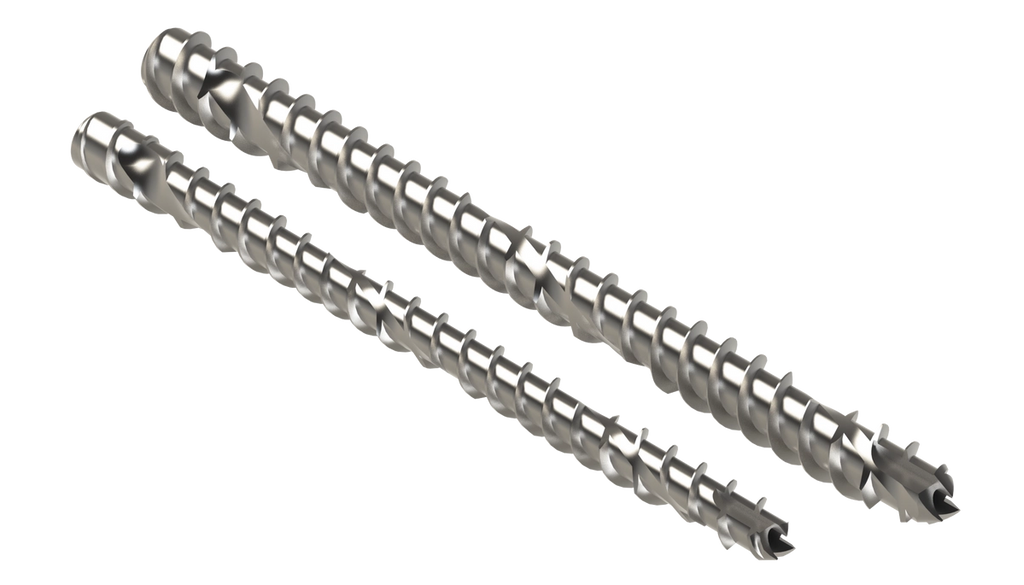
Premium tibial nails are engineered from Medical-Grade Titanium Alloy (Ti-6Al-4V ELI / ASTM F136). Titanium provides superior fatigue strength, an elastic modulus (approx. 110 GPa) closer to cortical bone than stainless steel (approx. 200 GPa), and full compatibility with Magnetic Resonance Imaging (MRI) diagnostic procedures.
Herzog Bend Integration: A 10.5° proximal posterior bend optimized at 30–40mm from the nail head allows entry through the safe zone of the tibial plateau without compromising the anterior articular facet or patellar tendon.
Distal Multi-Planar Locking: Distal cross-locking configurations (combining coronal, sagittal, and oblique screw trajectories) ensure rigid fixation in short distal tibial segments, preventing valgus/varus drift.
Dynamic Compression Slots: An elongated proximal slot allows controlled axial dynamization (up to 7mm) in delayed union cases or primary controlled weight-bearing regimens.
Clinical Precision: OIC Intramedullary Tibial Nailing System in Surgical Workflow
Standardized Product Matrix for Institutional Procurement
The following matrix outlines the standardized dimensional portfolio recommended for trauma centers and ASCs to achieve 98%+ anatomical coverage across diverse adult patient populations:
Specification Parameter
Technical Standard / Dimension Range
Clinical Intent & Sourcing Objective
Nail Diameter Outer (OD)
8.0 mm, 9.0 mm, 10.0 mm, 11.0 mm, 12.0 mm, 13.0 mm (0.5mm/1mm increments)
Accommodates both unreamed entry (small canals) and reamed techniques; ensures optimal endosteal cortical contact.
Nail Length Range
255 mm to 435 mm (in 15 mm structural increments)
Covers anatomical spans from distal physeal scar to proximal tibial tuberosity across short, medium, and tall patients.
Proximal Lock Screw Size
4.5 mm / 5.0 mm Cannulated & Solid Cortical Screws
Provides high shear force resistance against proximal fragment tilting and rotational destabilization.
Distal Lock Screw Size
4.0 mm / 4.5 mm Multi-Planar Threaded Screws
Oblique and orthogonal options secure metaphyseal bone purchase in distal 1/3 fractures.
Proximal Bend (Herzog)
10.5° Proximal Apex Posterior Bend
Prevents anterior cortex perforation during insertion and maintains proper coronal sagittal alignment.
Distal Cannulation
Fully Cannulated (compatible with 3.0mm reaming guide wires)
Enables smooth, guided insertion over ball-tipped guide wires during flexible reaming operations.
Regulatory Standards
ASTM F1264 (Static bending, dynamic fatigue, torsion), ISO 14630, FDA 510(k) cleared
Ensures verifiable mechanical endurance and global regulatory export compliance.
Require detailed mechanical test reports or trial tray kits?
3. Surgical Approach Dynamics: Suprapatellar vs. Infrapatellar Nailing
A key driver of innovation in intramedullary tibial nailing over the past decade is the clinical transition from traditional infrapatellar entry routes to the suprapatellar (semi-extended knee) approach. Procurement committees must evaluate whether candidate intramedullary tibial nail systems include instrumentation dedicated to suprapatellar techniques.
The conventional infrapatellar technique requires hyperflexing the knee beyond 90 degrees during reaming and nail driving. In proximal one-third tibial fractures, the quadriceps tendon exerts a powerful pull on the proximal fragment, leading to a classic procurvatum (anterior apex) and valgus deformity. Furthermore, hyperflexion compromises intraoperative fluoroscopic visualization under C-arm imaging.
The Suprapatellar Paradigm Shift
The suprapatellar approach maintains the leg in a position of semi-extension (flexed 15° to 20°). Inserting the nail through a quadriceps tendon stab incision and a specialized retro-patellar cannula system offers major clinical advantages:
Deformity Elimination: The relaxed quadriceps vector eliminates muscle pull on the proximal fragment, dramatically reducing procurvatum malalignment.
Simplified Fluoroscopy: AP and Lateral imaging under fluoroscopy can be executed effortlessly without repositioning the limb.
Reduced Anterior Knee Pain: Clinical studies confirm a lower incidence of chronic anterior knee pain compared to patellar tendon split infrapatellar approaches.
Procurement Insight: Forward-thinking healthcare systems prioritize intramedullary tibial nail sets that feature radiolucent carbon-fiber targeting handles engineered for both suprapatellar and infrapatellar modes, minimizing the requirement to purchase duplicate tray configurations.
Future Technology & Manufacturing Trends
4. Technology Trends & Future Directions in Tibial Fracture Fixation
As orthopedic medtech evolves, several groundbreaking engineering trends are reshaping the design, manufacturing, and performance expectations of intramedullary tibial nails:
A. Advanced Surface Modifications & Antimicrobial Coatings
Surgical site infections (SSI) and chronic osteomyelitis remain catastrophic complications in open tibia fractures (Gustilo-Anderson Grade I–III). Next-generation tibial nails are leveraging advanced surface modifications:
Anodization Type II: Increases surface hardness, reduces fretting corrosion at the nail-screw interface, and reduces bacterial adhesion coefficient.
Antibiotic-Eluting & Silver-Ion Coatings: Biodegradable poly(L-lactide) (PLLA) coatings loaded with Gentamicin or local antimicrobial agents provide controlled release during the critical 48-to-72-hour postoperative window.
B. Additive Manufacturing & 3D-Printed Anatomical Mesh Integration
The integration of additive manufacturing (3D printing) is revolutionizing complex trauma management. While standard tibial nails remain subtractively CNC-machined for optimal fatigue life, 3D printing allows custom patient-matched proximal caps, porous titanium metaphyseal sleeves, and specialized bone-graft containment structures for extensive segmental defect reconstruction.
C. Smart Sensors & Telemetric Strain Monitoring
The frontier of "smart trauma implants" involves embedding micro-electro-mechanical systems (MEMS) and passive RFID strain sensors within the hollow inner cannulation of the tibial nail. These micro-sensors measure micromotion, axial load distribution, and temperature changes in real-time. Clinicians receive non-invasive telemetry data indicating bone consolidation progress, enabling objective decisions on weight-bearing acceleration or early dynamization.
Next-Gen Manufacturing: 3D Printing & Advanced Surface Treatments
Global Procurement Trends & Supply Chain Economics
5. Global Procurement Dynamics: Navigating Price Compression & Regulatory Compliance
The global market for intramedullary nails is undergoing a fundamental restructuring. Historically dominated by a small cartel of multinational OEMs charging inflated price points ($1,800 to $3,500 per construct), the market is aggressively shifting toward Value-Based Healthcare (VBH) models.
A. Breaking the Monopoly: The 50–60% Cost Reduction Imperative
Hospital financial officers (CFOs) and surgical directors are increasingly aware that raw material costs (Ti-6Al-4V ELI bar stock) and high-precision Swiss CNC machining costs represent only a small fraction of a legacy implant's invoice price. The remainder covers expensive sales rep commissions, legacy overhead, and marketing markups.
By partnering with value-focused MedTech manufacturers like the Orthopaedic Implant Company (OIC), healthcare institutions access identical high-grade materials, FDA-cleared designs, and ISO-certified manufacturing at 50% to 60% below market average pricing. This transparent pricing model unleashes millions of dollars in annual savings across orthopedic service lines without altering clinical protocols or surgeon satisfaction.
B. Navigating Global Regulatory Hurdles (MDR & FDA 510k)
Global procurement teams sourcing tibial nails must demand rigorous regulatory dossier validation:
EU MDR 2017/745 Compliance: The European Medical Device Regulation has raised the threshold for clinical evaluation reports (CER), post-market surveillance (PMS), and Technical Files for Class IIb implants. Sourcing teams must ensure suppliers hold up-to-date MDR certificates.
US FDA 510(k) Clearance: Verification of substantial equivalence through rigorous mechanical testing per ASTM F1264 standards (static four-point bending, fatigue testing to 1 million cycles without failure).
ISO 13485:2016 Certification: Complete traceably audited Quality Management Systems (QMS) spanning raw material melt source certification, CNC machining tolerance verification, cleaning, packaging, and bioburden testing.
6. Frequently Asked Questions (FAQ) for Global Procurement & Sourcing Teams
Below are answers to the top technical, regulatory, and commercial inquiries submitted by global hospital buyers, tender boards, and distributors when evaluating Intramedullary Tibial Nails:
What material grade is optimal for Intramedullary Tibial Nails, and how does it compare to stainless steel?
Medical-grade Titanium Alloy (Ti-6Al-4V ELI / ASTM F136) is the preferred gold standard. Titanium offers approximately twice the fatigue resistance under cyclic bending loads compared to 316L stainless steel, while maintaining a lower modulus of elasticity (110 GPa vs. 200 GPa). This lower modulus reduces stress shielding at the fracture site, promoting faster callus formation. Furthermore, titanium exhibits superior biocompatibility and allows artifact-reduced MRI imaging.
How do OIC Intramedullary Tibial Nails achieve a 50–60% price reduction while maintaining top-tier quality?
OIC disrupts the traditional MedTech cost structure by eliminating unnecessary sales rep commissions, excessive corporate overhead, and inflated marketing budgets. We invest directly in high-precision manufacturing, Swiss CNC machinery, FDA 510(k) clinical testing, and ISO 13485 quality control systems. Hospitals receive premium, clinically proven implants directly, paying for the actual device rather than sales rep presence.
Are these tibial nail sets compatible with both Suprapatellar and Infrapatellar surgical techniques?
Yes. The OIC Tibial Nailing System features universal proximal geometry, a standardized 10.5° Herzog bend, and radiolucent carbon-fiber targeting arms designed to interface seamlessly with both suprapatellar protective sleeve assemblies and standard infrapatellar instrumentation sets. This dual-compatibility simplifies hospital inventory management.
What mechanical testing standards must an Intramedullary Tibial Nail pass for global regulatory approval?
Intramedullary Tibial Nails must undergo mandatory mechanical benchmarking under ASTM F1264 (Standard Specification and Test Methods for Intramedullary Fixation Devices). Key testing protocols include Static Four-Point Bending Strength, Structural Stiffness, Dynamic Fatigue Life (withstanding at least 1,000,000 load cycles without plastic deformation or fracture), and Torsional Stiffness testing.
What packaging options are available for hospital supply chain logistics (Sterile vs. Non-Sterile)?
OIC provides flexible supply chain formats tailored to institutional preferences. Devices can be supplied in individually sealed gamma-sterilized double-barrier blister packs (ready for immediate OR shelf access) or non-sterile bulk configurations for inclusion in modular hospital sterilization tray trays.
What is the typical lead time and Minimum Order Quantity (MOQ) for international OEM/ODM or bulk institutional orders?
For standard OIC catalog configurations, inventory is maintained in our central US distribution centers with international dispatch available within 5 to 10 business days. Custom OEM/ODM manufacturing orders or specialized distributor private labeling agreements typically require a 6-to-8 week production lead time depending on order volume and regulatory dossier customization.
Why Partner With The Orthopaedic Implant Company
7. The OIC Enterprise Advantage: Redefining Value in Orthopedic Trauma
The Orthopaedic Implant Company (OIC) was founded on a simple, revolutionary premise: high-quality orthopedic implants should be accessible, affordable, and transparent. As healthcare providers worldwide contend with shrinking budgets, OIC offers clinically proven, FDA-cleared trauma solutions engineered to the highest global standards—at prices 50% to 60% below market average.
Surgeon-Designed Excellence: Created in collaboration with leading orthopedic trauma surgeons to deliver intuitive, ergonomic, and time-saving instrumentation.
Proven Clinical Track Record: Backed by extensive biomechanical testing, clinical registry data, and widespread hospital deployment across top-tier health systems.
Complete System Completeness: From mini-fragment plates to cannulated screws and intramedullary nails, OIC provides a complete trauma ecosystem.
Precision Hardware: Quality-Assured Engineering at 50-60% Savings
Transform Your Orthopaedic Supply Chain Today
Join hundreds of forward-thinking hospitals, surgical centers, and international distributors who have optimized surgical quality while saving millions in implant costs. Request a sample tray evaluation, technical dossier, or instant quote today.