


Insights • Innovation • Value
Orthopaedic Insights & Industry Blog
Exploring Value-Based Healthcare & Clinical Progress
How to Choose Wrist Fracture Plates for Global Buyers?
Table of Contents
- Assess Distal Radius Fractures Using AO/OTA Classification and 17.5% Epidemiology
- Match Volar, Dorsal, and Fragment-Specific Plates to Fracture Patterns
- Select 2.4–2.7 mm Plates and Confirm Subchondral Screw Coverage
- Verify Titanium Grade, ISO 13485 Quality, and ISO 10993 Biocompatibility
- Compare FDA 510(k), CE MDR, Clinical Data, MOQ, and Global Lead Times
- FAQS
- Conclusion
- Related Posts
Choosing Wrist Fracture Plates for global markets is not simply a purchasing decision. It is a clinical, technical, and supply-chain judgment. A plate may fit one distal radius fracture beautifully, yet perform poorly in another case. Buyers must examine fracture patterns, plate contour, screw options, material strength, and surgical access. The surgeon’s workflow matters too. A narrow plate, clear instrumentation, and reliable locking threads can reduce unnecessary handling during surgery.
Jesse B. Jupiter, MD, a widely recognized authority in wrist trauma, stated, “The goal of treatment is to restore the anatomy and function of the wrist.” This principle should guide every purchasing discussion. Global buyers also need dependable quality documentation, traceability, packaging integrity, sterilization information, and regulatory support for their target markets. These details may appear administrative. They directly affect clinical confidence.
Cost still matters. It should not stand alone.
A lower unit price can hide inconsistent tolerances, limited sizes, or weak after-sales support. Buyers should request sample evaluations, technical drawings, clinical feedback, and clear warranty terms. They should compare complete systems, not isolated plates. No selection process is flawless. Even experienced teams can overlook a small issue, such as screwdriver compatibility or insufficient screw length options. That is why careful supplier audits and surgeon input remain essential. This guide explores how to assess Wrist Fracture Plates with practical judgment, measurable criteria, and room for honest reconsideration.
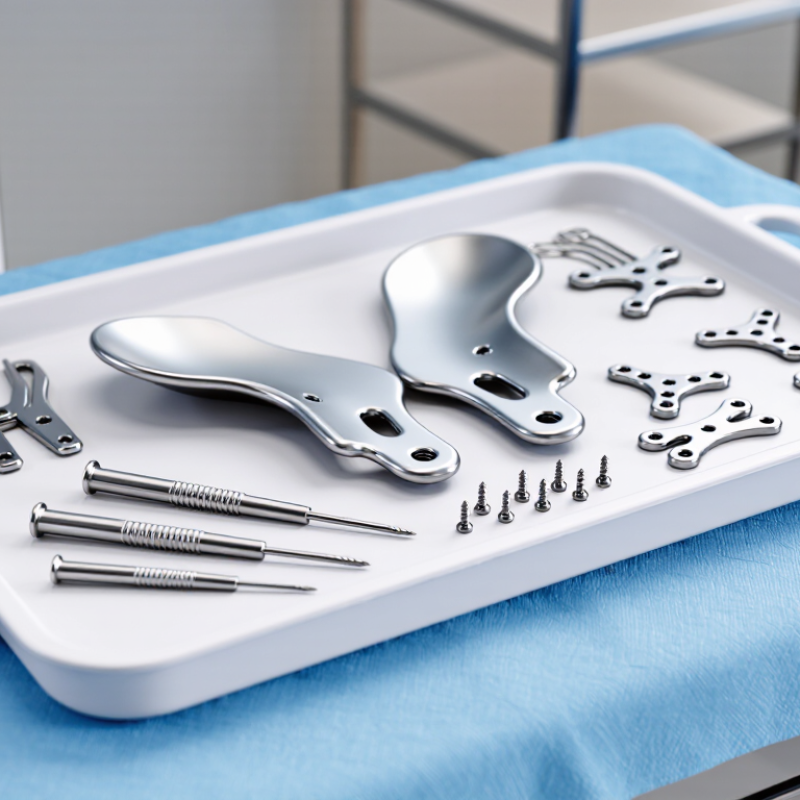
Assess Distal Radius Fractures Using AO/OTA Classification and 17.5% Epidemiology
Choosing wrist fracture plates starts with understanding the fracture, not comparing catalogs. Distal radius fractures represent a significant clinical burden, with some epidemiological reviews reporting a 17.5% share among upper-limb fractures. That figure varies by age, sex, region, and study design. Buyers should verify the original population before using it for planning.
AO/OTA classification provides a practical framework. Type A fractures remain extra-articular, while Type B fractures involve part of the joint. Type C fractures cross the entire articular surface and often require stronger control. CT imaging can reveal die-punch fragments, dorsal comminution, or joint-step defects that plain radiographs miss. Small details matter.
Not every fracture needs the same plate. For a simple extra-articular pattern, a low-profile volar plate may provide stable support with limited soft-tissue irritation. Complex Type C injuries may need broader subchondral coverage, multiple locking directions, or additional fixation. Bone quality also changes the decision, especially in older patients. Plate dimensions, screw range, instrument compatibility, sterilization status, and regulatory documentation deserve careful review. Global procurement adds another layer: packaging must withstand transport, and technical instructions should remain clear across languages. Classification is not destiny. Surgeon judgment still matters. A useful checklist can become too rigid when fracture anatomy is unusual. That is where a second imaging review may prevent an expensive mistake.
Match Volar, Dorsal, and Fragment-Specific Plates to Fracture Patterns
How to Choose Wrist Fracture Plates for Global Buyers?
Plate selection should begin with the fracture pattern, not the product catalog. Volar plates suit many distal radius fractures with manageable volar access and stable fixation needs. Dorsal plates can help when fragments displace dorsally or require direct dorsal support. They may, however, irritate tendons if placement is not carefully controlled. Fragment-specific plates are useful for small, isolated pieces that a broader plate cannot capture securely. CT images often reveal these details better than standard radiographs.
Experienced surgical teams also assess bone quality, fragment size, comminution, and the planned approach. A plate should support reduction without obstructing joint motion or soft-tissue recovery. No design fits every wrist. That sounds obvious, yet purchasing decisions sometimes follow inventory habits instead of anatomy. Global buyers should verify dimensional drawings, material data, instrument compatibility, sterilization guidance, and regulatory documentation for the intended market. Clinical review remains essential before bulk purchasing.
Tips: Compare plate geometry with actual fracture images. Check screw trajectories around the joint surface. Confirm left and right configurations. Ask whether fragment-specific options are available. Review surgeon feedback from similar cases. A low-profile plate may reduce irritation, but it can provide less control in severely comminuted bone. Test the full system, when possible, before standardizing procurement.
Select 2.4–2.7 mm Plates and Confirm Subchondral Screw Coverage
Global buyers should match wrist fracture plates to anatomy, fracture pattern, and surgical access. A 2.4–2.7 mm plate often balances low profile design with dependable fixation. However, thickness alone does not determine performance. Distal radius fractures vary widely.
Subchondral screw coverage deserves close review. The distal holes should support the main articular fragments beneath the joint surface. Check their position on anteroposterior, lateral, and oblique images. Confirm screw trajectories and lengths before surgery. Screws should support subchondral bone without penetrating the joint. Coverage is not simply the number of holes. Their spacing and direction matter.
A useful evaluation includes plate contour, hole configuration, locking options, and compatibility with available instruments. Ask whether the plate can reach the radial styloid, lunate facet, and intermediate column when needed. A plate may fit a template but miss a critical fragment during the operation. That possibility deserves honest attention. CT-based planning can reveal problems that plain radiographs hide. Experienced surgeons should assess the final choice.
For international purchasing, review mechanical test data, material specifications, sterilization validation, packaging integrity, and traceability records. Confirm regulatory documentation for the destination market. Clear surgical instructions and training support safer use across different hospitals. Independent clinical feedback is valuable, although it may not represent every patient population. Procurement teams should compare evidence, not attractive specifications alone.
Verify Titanium Grade, ISO 13485 Quality, and ISO 10993 Biocompatibility
How to Choose Wrist Fracture Plates for Global Buyers?
Wrist fracture plates should be evaluated through documented evidence, not polished sales language. Confirm the titanium grade, such as commercially pure titanium or Ti-6Al-4V, against the purchase specification. Request mill certificates, chemical composition results, and traceability from raw material to finished plate. ISO 13485 is important because it addresses the medical device quality management system. The ISO Survey 2023 reported more than 39,000 ISO 13485 certificates worldwide. That number shows broad adoption, but certification alone does not prove every batch is reliable.
Biocompatibility needs equal attention. Ask for an ISO 10993 evaluation based on the plate’s material, coating, processing, and patient contact duration. FDA guidance on ISO 10993-1 emphasizes biological safety planning, rather than relying on one generic test report. Check reports for cytotoxicity, sensitization, irritation, and chemical characterization when relevant. A missing test may be acceptable if scientifically justified, but vague explanations deserve scrutiny. In real purchasing work, buyers sometimes focus on tensile strength and forget cleaning residues. That mistake is easy to make.
Tips: Compare the certificate scope with the actual factory and product. Verify certificate numbers through the issuing body. Review test dates, sample identification, and acceptance limits. Keep a written question log. It exposes gaps later. I would also request sterilization and packaging validation records, even when the plate is supplied non-sterile. Procurement teams often overlook this detail.
Compare FDA 510(k), CE MDR, Clinical Data, MOQ, and Global Lead Times
How to Choose Wrist Fracture Plates for Global Buyers?
A wrist fracture plate should match the target market, fracture pattern, and surgical workflow. FDA 510(k) clearance shows substantial equivalence to a legally marketed device. It does not automatically prove suitability for every patient or country. CE marking under the EU MDR requires documented conformity and, where applicable, notified body assessment. Buyers should verify the certificate scope, intended use, and current validity.
Clinical data deserves close reading. Check whether studies involve similar plate designs, fixation methods, bone quality, and patient populations. A short summary is not enough. Look for complication rates, follow-up periods, and radiographic outcomes. Data may be limited. That should be stated clearly, not hidden behind polished language. Surgeon feedback can reveal practical details, such as screw insertion difficulty or plate prominence.
Commercial terms affect clinical availability. Compare MOQ with realistic annual demand, sterilization plans, and inventory risk. A low MOQ may look attractive, but unit costs can rise. Global lead times should include manufacturing, quality release, export documents, and customs clearance. Ask for separate estimates for samples and validated production. Also confirm packaging language and traceability records. Delays happen. A supplier that gives only one optimistic date may require deeper questioning.
| Evaluation Dimension | FDA 510(k) Considerations | CE MDR Considerations | Clinical Data Expectations | Typical MOQ for OEM or Private-Label Orders | Indicative Global Lead Time |
|---|---|---|---|---|---|
| Regulatory pathway |
510(k) Clearance The manufacturer generally demonstrates that the wrist fracture plate is substantially equivalent to a legally marketed predicate device. A 510(k) is a clearance pathway, not an FDA approval. |
MDR Conformity Assessment The manufacturer must meet the applicable requirements of Regulation (EU) 2017/745. Implantable fracture plates are commonly treated as Class IIb devices under the MDR classification rules, subject to product-specific assessment. |
A documented clinical evaluation is expected for both markets. The required depth depends on device design, indications, materials, predicates, risk profile, and the strength of available evidence. | Not determined by FDA or CE MDR regulations. MOQ is a commercial term agreed between the buyer and supplier. | Regulatory status can affect market-entry timing, but manufacturing lead time is controlled mainly by inventory, tooling, raw materials, quality release, and order quantity. |
| Regulatory documentation to request | Request the applicable 510(k) number, clearance decision information, product scope, indications for use, device classification, labeling, and any relevant limitations. | Request the EU Declaration of Conformity, valid MDR certificate where applicable, certificate scope, notified-body information, intended purpose, classification rationale, and post-market surveillance documentation. | Ask for a clinical evaluation report or equivalent summary, literature evaluation, risk-benefit conclusions, post-market clinical follow-up information where applicable, and traceable references. | Request a written MOQ schedule covering standard products, customized specifications, packaging changes, sterilization, and private-label artwork. | Request a written production schedule that separates raw-material procurement, machining, surface treatment, inspection, packaging, sterilization, and shipment. |
| Clinical evidence level |
Device-Specific Clinical data may not be required for every traditional 510(k), but FDA may request clinical evidence when bench, mechanical, biocompatibility, or other information does not adequately support substantial equivalence. |
Clinical Evaluation Required MDR requires a clinical evaluation. Depending on the device and available evidence, the manufacturer may use scientific literature, clinical experience, clinical investigations, or a combination of sources. |
Evidence should address intended anatomy, fracture indications, fixation performance, safety, material compatibility, adverse events, revision or removal considerations, and limitations of use. | MOQ does not indicate clinical quality. A small MOQ can still require complete regulatory and quality documentation, while a large MOQ does not prove clinical performance. | Additional clinical or regulatory review may extend qualification time beyond the factory production estimate, especially for new designs, new materials, or expanded indications. |
| Material and biocompatibility review | Common documentation includes material specifications, manufacturing controls, cleaning or sterilization information, and biocompatibility evaluation appropriate to the patient-contacting nature and duration of use. | The technical documentation should address material safety, biological evaluation, chemical characterization where relevant, sterilization validation if supplied sterile, and applicable general safety and performance requirements. | Clinical evidence should be consistent with the stated material, coating, surface treatment, and intended duration of implantation. Material changes may require a new assessment. | Standard material and finish options normally support lower MOQs. New alloys, coatings, colors, or packaging formats may require higher minimum quantities. | Standard titanium or stainless-steel configurations are generally faster to produce than products requiring special coatings, custom instruments, or new validation work. |
| Quality-system expectations | Confirm that the manufacturer operates an appropriate medical-device quality system and can provide controlled design, production, inspection, complaint-handling, and traceability records. | Confirm documented quality management, risk management, post-market surveillance, vigilance, technical documentation control, and conformity-assessment responsibilities appropriate to the MDR route. | Clinical claims should be consistent with controlled design inputs, verification and validation results, complaint trends, and post-market information. | Ask whether low-volume production uses the same inspection, traceability, and release procedures as standard-volume production. | Quality-release capacity, inspection queues, nonconformance handling, and batch-record review can add several business days after manufacturing is complete. |
| Indicative MOQ range |
Commercially Variable A practical planning range for standard, non-customized plates may be approximately 10–50 units per configuration, subject to supplier policy and stock availability. |
Commercially Variable For standard configurations, an indicative planning range may be approximately 10–50 units per configuration. MDR certification itself does not establish a minimum order quantity. |
Custom sizes, new hole patterns, special instruments, sterilized packaging, or validation requirements may increase the MOQ or require a separate development charge. | Private-label packaging, laser marking, custom trays, and translated instructions commonly require a higher MOQ than plain, standard products. | Stock-based orders may be available in smaller quantities. Made-to-order or customized products generally require a higher MOQ and a longer production schedule. |
| Indicative production lead time |
Approximately 4–8 Weeks This is a planning estimate for an already qualified, standard product with materials and components available. It excludes regulatory review and international transport. |
Approximately 4–8 Weeks The estimate applies to an already qualified, standard product. Technical-document updates, conformity activities, or labeling changes may require additional time. |
Clinical-data review and buyer qualification may add approximately 2–8 weeks or more, depending on document completeness and the scope of the evaluation. | Custom packaging, instruments, or product markings may add approximately 2–6 weeks beyond the base manufacturing estimate. | A realistic planning range for made-to-order products is approximately 6–12 weeks before shipment; complex customization or new tooling may take longer. |
| International shipping and delivery | After production and release, international delivery may require approximately 3–10 business days by express air service or approximately 3–8 weeks by consolidated ocean freight, excluding customs delays. | Delivery within Europe can be shorter than intercontinental delivery, but customs, import documentation, local representation, and destination-country requirements still need to be confirmed. | Clinical documentation does not determine freight time, but missing records can delay importer review, customs clearance, or hospital qualification. | Consolidating a larger order can reduce the unit freight cost but may increase the time before shipment if the buyer waits for full batch completion. | Confirm the Incoterm, shipping origin, destination, customs responsibility, insurance, delivery appointment, and expected transit time before issuing a purchase order. |
| Buyer verification checklist | Verify product scope, indications, predicate relationship, labeling consistency, manufacturing-site information, and whether the proposed configuration is covered by the clearance. | Verify certificate validity, scope, classification, notified-body status where applicable, EU representative arrangements, labeling, UDI obligations, and post-market responsibilities. | Confirm that evidence supports the exact plate geometry, material, coating, instruments, anatomical indication, and claimed clinical benefits rather than only a similar product category. | Compare MOQ by size, side, hole pattern, plate thickness, packaging format, and instrument set. Request separate pricing for samples and production quantities. | Obtain a milestone-based schedule with order confirmation, drawing approval, material arrival, production completion, quality release, packing, shipment, and estimated delivery dates. |
| Important interpretation | The MOQ and lead-time ranges in this table are indicative procurement benchmarks, not regulatory requirements or guarantees. Final decisions should be based on current, product-specific regulatory documents, clinical evidence, quality records, written commercial terms, and destination-market import requirements. | ||||
FAQS
Use the AO/OTA system. Type A is extra-articular, Type B is partially articular, and Type C crosses the full joint surface.
CT can reveal die-punch fragments, dorsal comminution, and joint-step defects. Plain radiographs may miss these small but important details.
No. Simple extra-articular fractures may suit low-profile volar plates. Complex injuries often need wider coverage and several locking directions.
Poor bone quality may require stronger fixation and better subchondral support. Older patients often need more careful planning.
Check plate dimensions, screw range, instruments, sterilization status, packaging strength, and clear multilingual instructions. Small gaps can cause delays.
Request the stated titanium grade, mill certificates, chemical composition results, and full traceability. The paperwork should connect raw material to finished plate.
It indicates a medical device quality management system. However, certification alone does not prove every batch is reliable.
Review ISO 10993-based evaluations for the material, coating, processing, and contact duration. Check cytotoxicity, sensitization, irritation, and chemical data when relevant.
Request sterilization and packaging validation records, even for non-sterile plates. Packaging should protect products during long transport.
No. Classification helps organize decisions, but unusual anatomy may require another imaging review. Rigid checklists can miss the real problem.
Conclusion
Choosing Wrist Fracture Plates requires a structured evaluation of fracture anatomy, implant design, and regulatory reliability. Begin by assessing distal radius fractures with the AO/OTA classification, while considering epidemiological data indicating that these injuries represent approximately 17.5% of relevant fracture cases in some clinical populations. Volar plates are commonly suited to many unstable patterns, whereas dorsal or fragment-specific plates may be preferable for dorsal displacement, marginal fragments, or complex intra-articular injuries. Plate dimensions between 2.4 and 2.7 mm should be matched to patient anatomy, and screw positioning must provide reliable subchondral support without penetrating the joint.
For global purchasing, confirm the titanium grade, manufacturing consistency, ISO 13485 quality systems, and ISO 10993 biocompatibility evidence. Buyers should also compare FDA 510(k) status, CE MDR documentation, clinical data, minimum order quantities, production capacity, and delivery lead times across markets. A balanced decision combines biomechanical suitability, patient safety, documentation quality, and dependable international supply.

Blog Tags: