


Insights • Innovation • Value
Orthopaedic Insights & Industry Blog
Exploring Value-Based Healthcare & Clinical Progress
China Best Dorsal Spanning Plates Supplier?
Table of Contents
- What Are Dorsal Spanning Plates and How Are They Used?
- Key Features of a Reliable Dorsal Spanning Plate Supplier
- Materials, Designs, and Manufacturing Standards to Compare
- How to Evaluate China-Based Dorsal Spanning Plate Manufacturers
- Ordering, Quality Control, and Export Considerations
- FAQS
- Conclusion
- Related Posts
Choosing the China Best Dorsal Spanning Plates Supplier? This question deserves more than a price comparison. Dorsal Spanning Plates support complex distal-radius and wrist injuries when ordinary fixation may not provide enough stability. A reliable supplier should understand surgical realities, not only factory output.
Dr. Jesse B. Jupiter, a respected hand and wrist surgeon, has expressed a practical principle: “Restore function, not merely anatomy.” That idea matters here. A dorsal spanning plate must bridge the wrist securely, align with the second or third metacarpal, and tolerate planned loading during healing. Small details matter. Smooth edges can reduce soft-tissue irritation. Consistent screw threads can improve fixation. Clear radiographic markings can help confirm positioning during surgery.
The best Chinese supplier should provide more than polished product images. Look for documented material specifications, dimensional testing, sterilization information, traceable batches, and surgeon-focused instrumentation. Stainless steel and titanium options may suit different clinical preferences. Locking holes, drill guides, and screw compatibility should be checked carefully. Lead time matters too, especially when hospitals manage urgent trauma cases.
Still, no supplier is perfect. A strong catalog cannot replace clinical evaluation. Some manufacturers communicate well before an order, then respond slowly after delivery. That weakness deserves attention. Buyers should review samples, packaging, certificates, and post-market support before committing. This article examines the practical standards, manufacturing capabilities, and service factors that can identify a dependable China Dorsal Spanning Plates supplier. Credibility is built through evidence. Not promises.
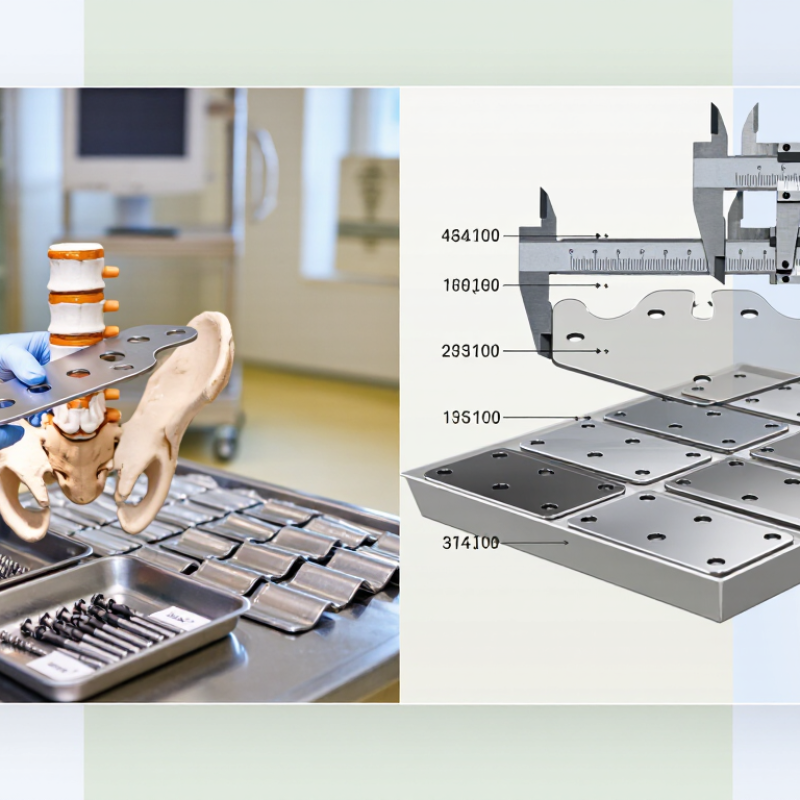
What Are Dorsal Spanning Plates and How Are They Used?
China Best Dorsal Spanning Plates Supplier?
Dorsal spanning plates are temporary bridge implants used to stabilize complex wrist fractures. They extend across the wrist, from the distal radius to a metacarpal bone. The plate holds the joint in controlled alignment while damaged bone and soft tissue recover. Unlike a standard volar plate, it bypasses the wrist joint and limits movement during healing.
Orthopedic surgeons may consider them for highly comminuted distal radius fractures, fracture-dislocations, or injuries with severe swelling. Placement usually requires careful imaging and surgical planning. The surgeon applies gentle traction, restores wrist length, and fixes the plate with screws. The wrist stays relatively still. Patients often need follow-up imaging, hand therapy, and later plate removal after healing. Timing varies.
Small details matter. A reliable supplier should provide traceable surgical-grade materials, accurate hole dimensions, compatible instruments, and clear manufacturing records. Surface finish matters too. Rough edges can irritate soft tissue. Screw fit must be consistent. Product documentation should support sterilization and clinical evaluation according to applicable regulations.
Clinical judgment remains central. A dorsal spanning plate is not a shortcut. It can protect alignment, but it also limits wrist motion and may require another procedure. Planning can be imperfect when swelling changes quickly. Surgeons should reassess imaging, soft-tissue condition, and patient needs throughout treatment. Pain, numbness, drainage, or unusual swelling requires prompt medical review.
Key Features of a Reliable Dorsal Spanning Plate Supplier
Choosing a China-based dorsal spanning plate supplier requires more than comparing unit prices. A reliable supplier understands wrist anatomy, temporary bridge fixation, and demanding operating-room conditions. Ask for dimensional drawings, material specifications, available lengths, and guidance on compatible screws. Practical experience matters here. Product familiarity should appear in training records, surgeon feedback, and responses to difficult sizing questions. Vague answers are warning signs.
Quality control must be visible, not merely promised. Look for a documented medical-device quality system, controlled manufacturing records, lot traceability, and inspection reports for critical dimensions. The supplier should explain surface finishing, packaging integrity, sterilization status, and shelf-life controls. Independent testing records can strengthen confidence when they are current and verifiable. Regulatory documents should match the destination market and exact product configuration. A certificate alone proves little.
Communication is another key feature. Reliable teams provide stable lead times, change notifications, complaint handling, and technical support after delivery. Request sample documents before placing a large order. Review drawings with a qualified orthopedic professional, because a small hole-position difference may affect surgical planning. Some suppliers respond quickly but cannot maintain consistency across batches. That weakness is easy to miss. Price matters, but traceability, clinical understanding, and honest limitations matter more. A supplier willing to discuss failed inspections or design revisions may be more trustworthy than one claiming perfection.
Materials, Designs, and Manufacturing Standards to Compare
Choosing the best China dorsal spanning plates supplier requires more than comparing prices. Materials, designs, and manufacturing standards reveal the real difference.
Titanium offers low density, corrosion resistance, and useful imaging properties. Stainless steel can provide higher stiffness and familiar surgical handling. The choice should match the plate’s load, profile, and intended fixation period. Check alloy certificates, surface finish, and dimensional reports. Small burrs around screw holes can affect surgical handling.
Design review should cover contour accuracy, hole placement, screw compatibility, and bridge length. A smooth dorsal profile may reduce soft-tissue irritation. It may also reduce mechanical strength if the plate becomes too thin. That trade-off deserves testing, not attractive drawings. Practical samples should undergo bending, fatigue, and torsion evaluation under documented conditions. Short tests are not enough.
Manufacturing reliability depends on controlled processes. Look for an ISO 13485 quality system, material traceability, validated machining, cleaning, packaging, and sterilization controls. Risk management should follow recognized medical-device practices, while biocompatibility evidence should address patient-contacting materials. Ask for inspection records, calibration data, nonconformance handling, and change-control procedures. A supplier may provide excellent prototypes yet struggle with repeat production. That gap is common. It needs honest discussion. On-site audits, independent testing, and batch samples can expose inconsistencies before clinical use.
China Best Dorsal Spanning Plates Supplier? - Materials, Designs, and Manufacturing Standards to Compare
| Comparison Dimension | Common Technical Baseline | Preferred Supplier Capability | Documents or Tests to Request | Procurement Importance |
|---|---|---|---|---|
| Intended Use | Temporary bridge fixation across the radiocarpal joint, commonly used for complex distal-radius fractures. | Designs clearly labeled for dorsal spanning or bridge-plating applications, with instructions covering placement, postoperative management, and planned removal when clinically appropriate. | Intended-use statement, surgical technique guide, indications, contraindications, and implant-removal guidance. | Prevents selection of a conventional non-bridging plate for a bridge-plating procedure. |
| Titanium Alloy Option | Wrought Ti-6Al-4V, commonly specified to ISO 5832-3 or ASTM F136; density is approximately 4.43 g/cm³ and elastic modulus is approximately 110 GPa. | Traceable titanium material certificates, controlled heat treatment, smooth finishing, and compatibility with the specified screw system. | Material certificate, chemical composition, mechanical-property report, heat/lot traceability, and surface-finish specification. | Lightweight material with relatively low stiffness; useful when implant weight and imaging considerations are important. |
| Stainless Steel Option | Wrought implant-grade 316L stainless steel, commonly specified to ASTM F138 or ISO 5832-1; density is approximately 7.9–8.0 g/cm³ and elastic modulus is approximately 193 GPa. | Consistent passivation or electropolishing, corrosion-control procedures, and clear separation of stainless-steel and titanium production routes. | ASTM F138 or ISO 5832-1 certificate, passivation records, corrosion-related inspection data, and lot traceability. | Typically offers high strength and stiffness, but is heavier than titanium. |
| Plate Geometry | Long, low-profile plates designed to bridge the wrist, with proximal fixation near the radial shaft and distal fixation in the hand or metacarpal region. | Multiple lengths, left/right or universal configurations, contoured profiles, rounded edges, and controlled plate thickness that balances strength with soft-tissue clearance. | Dimensioned drawings, tolerance chart, plate-thickness data, contouring limits, and cadaveric or simulated-fit evaluation. | Affects surgical exposure, soft-tissue irritation, fixation stability, and inventory flexibility. |
| Screw Compatibility | Common systems use approximately 2.4 mm or 2.7 mm-class screws, with locking, non-locking, or mixed-hole configurations depending on the design. | Validated plate–screw pairing, reliable thread engagement, controlled screw angulation where applicable, and clear torque instructions. | Screw specifications, hole-angle drawings, insertion-torque limits, stripping or pull-out data, and ASTM F543-related test documentation where applicable. | Improves fixation reliability and reduces the risk of incompatible components being used together. |
| Mechanical Performance | A bone-plate design should demonstrate resistance to bending, fatigue, and screw–plate failure under relevant loading conditions. | Risk-based verification using the final production geometry, material, surface treatment, and matched screw set rather than generic coupons alone. | Bending-strength and stiffness testing based on ASTM F382, fatigue testing, screw-hole integrity data, and worst-case configuration rationale. | Provides objective evidence that the plate can withstand expected temporary fixation loads. |
| Manufacturing Process | CNC machining, precision forming, laser marking, deburring, cleaning, passivation or anodizing, inspection, packaging, and sterilization where supplied sterile. | Validated processes, controlled critical dimensions, documented surface treatment, cleanroom controls where required, and qualified subcontractors. | Process flow, inspection plan, equipment qualification, cleaning validation, surface-treatment records, and supplier-control procedure. | Manufacturing consistency is as important as the nominal material specification. |
| Quality Management | Medical-device production is commonly controlled under ISO 13485 quality-management requirements. | A current certificate covering the relevant manufacturing site and device scope, supported by internal audit, CAPA, complaint handling, and change-control systems. | ISO 13485 certificate, certification-body details, audit status, CAPA summary, change-notification procedure, and batch-release records. | Helps verify that production is managed as a regulated medical-device process. |
| Biocompatibility and Biological Safety | Patient-contacting materials and residues should be evaluated through a biological-safety process consistent with ISO 10993. | Material-specific biological evaluation supported by chemical characterization, cleaning validation, and a documented biological-evaluation plan or report. | ISO 10993 assessment, extractables or chemical-characterization data where relevant, cleaning-residue limits, and material declarations. | Reduces risks associated with material composition, processing residues, and surface treatments. |
| Risk Management | Risks include plate breakage, screw loosening, loss of fixation, corrosion, soft-tissue irritation, incorrect sizing, and off-label reuse. | Formal risk management maintained throughout design and production in accordance with ISO 14971, with verification linked to identified hazards. | Risk-management summary, failure-mode analysis, design-verification matrix, post-market surveillance process, and field-correction procedure. | Shows whether technical testing addresses clinically relevant failure modes. |
| Packaging and Sterility | Products may be supplied non-sterile for hospital sterilization or sterile in validated packaging; the supply condition must be clearly stated. | Packaging protects the implant from damage and contamination, with validated sterile-barrier performance when sterile supply is claimed. | Packaging validation, sterilization method and validation summary, shelf-life data, labeling, and transport simulation results. | Ensures the product arrives in the declared condition and remains safe through its stated shelf life. |
| Regulatory and Labeling Readiness | Market access may require region-specific conformity assessment, technical documentation, device identification, and labeling controls. | Complete technical files, controlled artwork, traceability, UDI or equivalent identification where required, and documented change notification. | Declaration or registration evidence applicable to the target market, labeling samples, instructions for use, and device-history-record structure. | A technically strong product may still be unsuitable if its regulatory documentation does not support the target market. |
| Supplier Selection Signal | The lowest unit price alone does not establish product quality or regulatory suitability. | Prioritize verified material traceability, validated testing, stable quality performance, transparent documentation, and controlled production changes. | Request samples from production-equivalent tooling, a technical dossier, quality certificates, test reports, and a pre-shipment inspection plan. | Use a weighted scorecard rather than selecting a supplier solely by quotation price. |
Note: Applicable requirements depend on the intended market, device classification, supplied sterility condition, and the final product configuration. All specifications and claims should be verified against current official standards and the supplier’s controlled technical documentation.
How to Evaluate China-Based Dorsal Spanning Plate Manufacturers
China Best Dorsal Spanning Plates Supplier?
How to Evaluate China-Based Dorsal Spanning Plate Manufacturers
Selecting a China-based dorsal spanning plate manufacturer requires more than comparing prices. Review its experience with wrist trauma implants, bridge plating systems, and complex fracture cases. Ask for documented design histories, material certificates, and verification reports. Experienced teams should explain plate geometry, screw compatibility, radiographic visibility, and load-bearing requirements clearly.
Visit the facility when possible. Observe machining, polishing, cleaning, packaging, and inspection controls. Check whether the manufacturer follows a documented medical device quality system, such as ISO 13485. Request evidence of fatigue testing, dimensional inspection, biocompatibility evaluation, and sterilization validation where applicable. Traceability should reach the raw material batch and final inspection record. Small gaps can become serious later.
Communication also reveals manufacturing maturity. Can the engineering team answer technical questions without vague promises? Are drawings, samples, and revision records controlled? Request pre-production samples before approving a larger order. Measure hole alignment, plate contour, surface finish, and screw fit independently. My practical concern is simple: attractive samples may hide inconsistent production. I would also examine complaint handling and corrective-action records, even when the supplier seems reliable. Pricing matters, but documentation, repeatability, and clinical-use discipline matter more.
How to Evaluate China-Based Dorsal Spanning Plate Manufacturers
Material performance is one practical screening factor when evaluating dorsal spanning plate suppliers. The chart compares minimum tensile and yield strength requirements for two commonly used implant materials under ASTM standards. These values are material benchmarks, not company or brand performance claims.
Reference benchmarks: ASTM F138 for wrought 316L stainless steel and ASTM F136 for wrought Ti-6Al-4V ELI alloy. Supplier qualification should also verify ISO 13485 certification, ISO 14971 risk management, ISO 10993 biological evaluation, traceability, dimensional inspection, sterilization validation, and applicable regulatory documentation.
Ordering, Quality Control, and Export Considerations
China Best Dorsal Spanning Plates Supplier?
Choosing a dorsal spanning plates supplier requires more than comparing prices. Start with a clear purchase specification. Include plate length, hole pattern, alloy, surface finish, and required tolerances. Ask for recent inspection reports, material certificates, and batch traceability records. A reliable manufacturer should explain its quality system, production equipment, and corrective-action process. ISO 13485 certification is useful, but it should not replace a practical audit.
Ordering details deserve equal attention. Confirm minimum order quantities, sample charges, lead times, payment terms, and replacement procedures before signing. Request a pilot batch before placing a larger order. Inspect dimensions, screw fit, packaging integrity, and labeling against approved drawings. Export documents should match the shipment exactly. Check commercial invoices, packing lists, certificates, and destination-market requirements with an experienced customs or regulatory specialist. Small document errors can delay a container.
Tips: Keep one approved sample. Record every revision. Ask for inspection photos before shipment. Do not accept vague answers about testing. A low price can hide costly rework. No audit is perfect. Supplier performance may also change after several orders, so review each batch and keep written evidence. This step feels slow, yet it protects clinical quality and delivery reliability.
FAQS
It is a temporary bridge implant for complex wrist fractures. It extends from the distal radius to a metacarpal bone. The wrist stays controlled and relatively still.
It may help with severely fragmented distal radius fractures, fracture-dislocations, or major swelling. The decision depends on imaging, soft-tissue condition, and patient needs. It is not a shortcut.
The surgeon uses imaging, gentle traction, and careful alignment. Screws secure the plate across the wrist. Small positioning errors matter.
Yes. It bypasses the wrist joint and restricts motion during healing. Hand therapy is often needed afterward. Movement returns gradually, not instantly.
The plate often requires later removal after healing. Removal timing varies between patients. Healing must be reassessed first.
Request material certificates, dimensional drawings, screw compatibility details, and inspection records. Traceable manufacturing records are important. Clear answers matter.
Titanium offers low density and corrosion resistance. Stainless steel may provide greater stiffness. The material should match the fixation period and mechanical demands.
Check bridge length, hole placement, contour accuracy, surface finish, and screw fit. Rough edges may irritate soft tissue. A thinner plate is not automatically better.
Review quality-system records, calibration data, batch samples, and nonconformance procedures. Independent bending, fatigue, and torsion testing can reveal weaknesses. Short tests may mislead.
Pain, numbness, drainage, or unusual swelling should be reported quickly. Swelling can change treatment plans. Reassessment is sometimes necessary.
Conclusion
Dorsal Spanning Plates are specialized orthopedic devices used to stabilize complex wrist injuries, particularly when the joint requires temporary bridging and protection during healing. This article explains their clinical purpose, typical applications, and the features that distinguish a reliable supplier, including consistent product quality, accurate dimensions, dependable documentation, responsive communication, and appropriate technical support.
It also reviews how buyers can compare materials, structural designs, surface finishes, and manufacturing standards when assessing China-based manufacturers. Key considerations include production capabilities, quality-control procedures, inspection records, packaging, sterilization arrangements, lead times, export documentation, and after-sales service. A careful evaluation should combine product specifications with factory audits, sample verification, and clear order requirements. By following a structured purchasing process, hospitals, distributors, and medical-device professionals can identify a qualified manufacturing partner and obtain Dorsal Spanning Plates that meet intended clinical and regulatory expectations.
Blog Tags: