


Insights • Innovation • Value
Orthopaedic Insights & Industry Blog
Exploring Value-Based Healthcare & Clinical Progress
What Is the Best Mini Fragment Plating System from China?
Table of Contents
- Define Mini Fragment Plates: 1.5–2.7 mm Systems for Small-Bone Fixation
- Compare Plate Profiles, Hole Types, and Locking Angles in 2.0–2.7 mm Sets
- Verify 316L and Ti-6Al-4V Materials Under ASTM F138 and ASTM F136
- Assess Biocompatibility and Sterilization Under ISO 10993 and ISO 17665
- Select Chinese Manufacturers by ISO 13485, NMPA, and Clinical Evidence
- FAQS
- Conclusion
- Related Posts
Choosing the best Mini Fragment Plating System from China requires more than comparing prices or catalogue photographs. The right system should match surgical needs, fracture patterns, and hospital protocols. Experienced surgeons often examine plate profiles, screw options, hole spacing, and instrument handling before making a decision. Small differences matter. A plate that feels smooth in the hand may reduce unnecessary adjustment during surgery. A well-designed tray can also improve workflow in a busy operating room.
China has many orthopedic manufacturers with different levels of engineering experience, quality control, and international service. Reliable evaluation should include material specifications, dimensional testing, surface treatment, batch traceability, and sterilization guidance. Evidence of a certified quality management system, such as ISO 13485, can support confidence, but certification alone does not prove clinical suitability. Ask for technical files, inspection records, product samples, and clear instructions for use. Speak with qualified distributors and surgeons who have practical experience with similar systems.
There is no universal “best” option. That conclusion would be too simple. A useful comparison should consider titanium or stainless-steel construction, locking and non-locking screw compatibility, anatomical contours, radiographic visibility, and instrument durability. Supplier communication also matters when urgent replacement parts are needed. Some promising systems may still require stronger clinical documentation or more consistent packaging. Buyers should verify local regulatory requirements before procurement and avoid relying on marketing claims alone. This guide examines these factors carefully, helping readers identify a Mini Fragment Plating System that balances safety, performance, traceability, and long-term support.
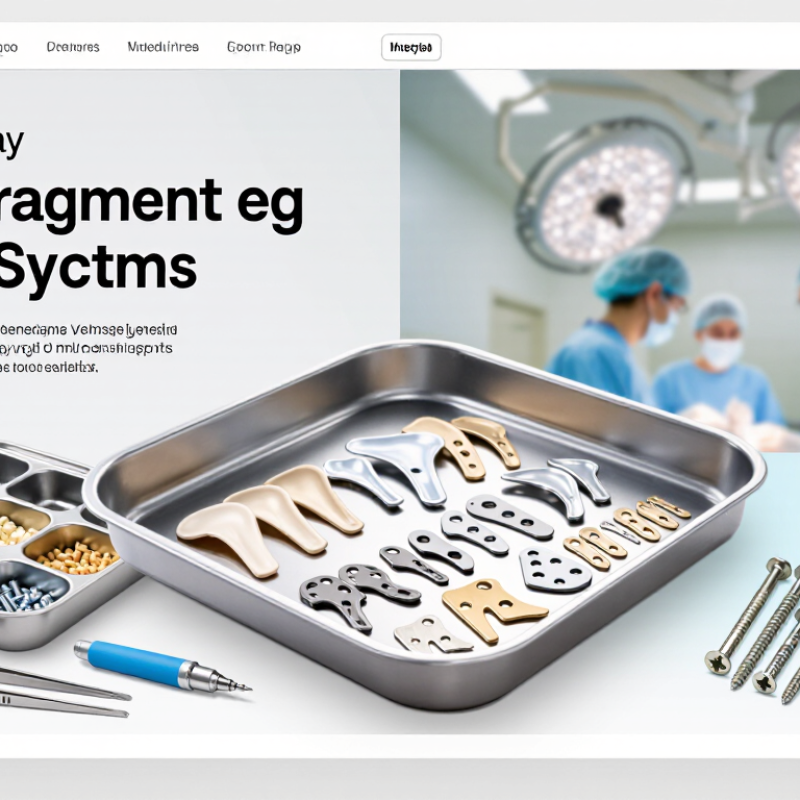
Define Mini Fragment Plates: 1.5–2.7 mm Systems for Small-Bone Fixation
What Is the Best Mini Fragment Plating System from China?
Mini fragment plates are designed for small-bone fixation, usually within the 1.5–2.7 mm range. These systems support delicate areas such as the hand, wrist, foot, and ankle. Their compact profiles help reduce soft-tissue irritation around narrow anatomical surfaces. Plate holes may support locking, compression, or a combination of both. The right choice depends on bone size, fracture pattern, and surgical access. A 1.5 mm plate suits very small fragments, while a 2.7 mm plate offers greater structural support. However, a larger plate is not automatically better.
Reliable evaluation should include material data, screw accuracy, plate contouring performance, and fatigue testing. Stainless steel and titanium have different handling characteristics. Titanium is lighter, but some surgeons prefer the tactile feedback of steel. These details matter during a procedure. Clear dimensional drawings also help teams select compatible instruments and screws. Packaging quality, traceability, and validated sterilization information should receive equal attention. A low price alone proves very little.
Tips: Check the plate thickness before ordering. Confirm screw diameter and thread type. Request test reports and sample implants when possible. Compare the system with actual imaging or bone models. Small mismatches can create large problems. Teams should also review their results honestly. A system may work well in one fracture pattern, yet feel limited in another. That limitation deserves attention.
Mini Fragment Plating Systems: Nominal Screw Diameter and Typical Use
Mini fragment systems generally use 1.5–2.7 mm screws for fixation of small bones and small bone fragments. Smaller diameters are commonly selected for delicate hand, wrist, foot, and ankle anatomy, while larger diameters can provide greater purchase for thicker fragments. Screw diameter alone does not determine the best system; plate design, locking options, instrumentation, material, and surgeon-specific requirements must also be evaluated.
Compare Plate Profiles, Hole Types, and Locking Angles in 2.0–2.7 mm Sets
Choosing the best mini fragment plating system from China starts with plate geometry, not price. In 2.0–2.7 mm sets, low-profile plates reduce soft-tissue irritation around the hand, foot, and distal radius. Thicker plates may improve stiffness, but they can feel prominent beneath thin skin. The smallest plate is not always best.
Hole design changes surgical control. Round compression holes support axial compression, while elongated holes permit adjustment before final tightening. Combination holes offer both functions. Locking holes provide fixed-angle stability, especially in osteoporotic bone. Variable-angle holes improve screw direction, but excessive angulation may reduce thread engagement. Many systems specify an angular range near 15 degrees; surgeons should verify the actual technical file.
Published biomechanical reviews report that 2.0–2.7 mm constructs can achieve adequate stability for selected periarticular and metacarpal fractures when screw purchase and plate contour are appropriate. A 2023 systematic review of mini-fragment fixation studies reported union rates above 90% in selected upper-extremity cohorts, though study definitions varied. That limitation matters. Laboratory strength is not clinical proof. I would compare cyclic loading results, fatigue testing, and corrosion data before reviewing marketing claims. ASTM F543 testing can help assess screw performance, while ISO 10993 documentation supports biological safety review. Manufacturing quality also depends on laser marking, burr control, dimensional inspection, and traceability. Small details matter. A plate that fits smoothly on a model may still require bending during surgery.
What Is the Best Mini Fragment Plating System from China? - Compare Plate Profiles, Hole Types, and Locking Angles in 2.0–2.7 mm Sets
Comparative guide to commonly specified mini-fragment plate configurations. Dimensions and locking options are representative of the 2.0–2.7 mm class; the final selection should be confirmed against the applicable technical file, surgical indication, and local regulatory documentation.
| Plate Profile | Typical System Size | Common Plate Thickness | Typical Width Range | Typical Hole Types | Locking Angle | Compatible Screw Diameter | Typical Applications | Key Selection Considerations |
|---|---|---|---|---|---|---|---|---|
| Straight plate Low-profile, narrow shaft |
2.0 mm2.4 mm2.7 mm | 0.8–1.5 mm | 5–8 mm | Round Combi Threaded locking | Fixed 0° or variable-angle locking, commonly up to ±15° where supported | Approximately 2.0, 2.4, or 2.7 mm cortical and locking screws | Metacarpals, metatarsals, phalanges, small avulsion fragments, and simple long-segment fixation | Choose narrow widths for soft-tissue coverage; use longer plates when more bicortical fixation points are required. |
| T plate Broad transverse head with narrow shaft |
2.0 mm2.4 mm | 0.8–1.4 mm | 6–12 mm head width | Round Combi Threaded | Usually fixed 0°; variable-angle versions commonly allow up to ±15° | Approximately 2.0 or 2.4 mm | Base-of-phalanx fractures, periarticular fractures, dorsal or volar buttress fixation | The transverse head improves fragment capture; confirm that screw trajectories avoid the joint surface. |
| L plate Angled buttress profile |
2.0 mm2.4 mm2.7 mm | 0.9–1.6 mm | 5–10 mm | Round Combi Locking | Fixed 0° or variable-angle, commonly up to ±15° | Approximately 2.0, 2.4, or 2.7 mm | Unicondylar fragments, marginal fractures, and fractures requiring a directional buttress | Left- and right-specific designs can improve contouring and reduce intraoperative bending. |
| Y plate Forked distal head |
2.0 mm2.4 mm | 0.8–1.4 mm | 7–13 mm head width | Threaded locking Combi | Fixed 0°; variable-angle designs commonly provide up to ±15° per hole | Approximately 2.0 or 2.4 mm | Small periarticular fragments where two divergent distal screws are useful | Check head geometry, screw divergence, and available bone stock before selecting the plate. |
| Reconstruction plate Contourable with multiple bending zones |
2.4 mm2.7 mm | 1.0–1.8 mm | 6–10 mm | Round Combi Locking | Fixed 0° or variable-angle, commonly up to ±15° | Approximately 2.4 or 2.7 mm | Irregular anatomy, multi-fragmentary fractures, and areas requiring three-dimensional contouring | Repeated bending may reduce mechanical performance; use the specified bending zone and approved instruments. |
| Box or mesh plate Low-profile multi-hole surface |
2.0 mm2.4 mm | 0.6–1.2 mm | 8–20 mm | Round Locking Combination | Usually fixed 0°; variable-angle holes may allow up to ±15° | Approximately 2.0 or 2.4 mm | Comminuted zones, small fragment bridging, and surface-area fixation where multiple screws are needed | Provides flexible screw placement, but excessive plate coverage can increase prominence and soft-tissue irritation. |
| Compression plate Dynamic compression or combination-hole design |
2.4 mm2.7 mm | 1.0–1.8 mm | 6–9 mm | Dynamic compression Combi Locking | Non-locking compression portion plus fixed or variable-angle locking portion | Approximately 2.4 or 2.7 mm | Simple transverse or short-oblique fractures where axial compression is desired | Compression requires appropriate fracture reduction and screw placement; locking screws alone do not create interfragmentary compression. |
Verify 316L and Ti-6Al-4V Materials Under ASTM F138 and ASTM F136
What Is the Best Mini Fragment Plating System from China?
A reliable Chinese mini fragment plating system should support traceable incoming inspection. Use optical emission spectroscopy or validated laboratory analysis, not visual checks alone. X-ray fluorescence can help screen 316L, but titanium grades may require stronger confirmation. Record heat numbers, chemical results, plating-bath temperature, current density, and coating thickness. ASTM F86 also provides useful guidance for metallic implant surface preparation and marking. Clean surfaces are essential.
Small parts create large control problems. Edges can plate faster. Cavities may receive less coverage. ASTM F2129 testing can evaluate corrosion behavior after processing, while ISO 10993 planning supports biological safety assessment. A 2024 medical-device quality report from the International Organization for Standardization stresses process traceability and risk-based validation across implant manufacturing. The exact report data should be checked against its original edition.
I would not trust a bright finish alone. It looks convincing. In practice, one missed rinse can change adhesion results. A pilot batch, cross-section measurement, adhesion testing, and independent material certificates provide stronger evidence than supplier claims. Perfect documentation is rare, but unexplained gaps should stop release.
Assess Biocompatibility and Sterilization Under ISO 10993 and ISO 17665
What Is the Best Mini Fragment Plating System from China?
When evaluating a mini fragment plating system from China, biocompatibility evidence deserves close attention. A polished plate may look safe, but appearance proves little. Under ISO 10993, the assessment should match the device’s materials, processing, and clinical contact. Review the biological evaluation plan, material certificates, cleaning records, and manufacturing changes. Relevant testing may include cytotoxicity, sensitization, irritation, and systemic toxicity. The exact test package depends on tissue contact and exposure duration.
Ask for traceable samples from routine production. Do not rely only on prototype parts. Residual machining oils, passivation chemicals, or packaging particles can change test results. That detail is easy to miss. Extract preparation should reflect the final device condition, including surface treatment and sterilization. An independent laboratory can improve credibility, especially when test reports lack raw data or clear sample identification.
Sterilization requires a separate technical review under ISO 17665. For moist heat processing, examine the validated cycle, load configuration, temperature distribution, pressure records, and routine monitoring controls. The claimed sterility assurance level should be scientifically justified. Packaging integrity also matters after sterilization, transport, and storage.
A strong supplier can explain requalification triggers, such as equipment changes or altered loading patterns. However, documentation may still contain gaps. I would question vague statements like “autoclave compatible.” The best choice is not determined by country of origin or low price, but by consistent evidence linking materials, biological safety, sterilization, and production control.
Select Chinese Manufacturers by ISO 13485, NMPA, and Clinical Evidence
What Is the Best Mini Fragment Plating System from China?
Selecting a Chinese mini fragment plating system requires more than comparing prices or screw counts. Start by checking ISO 13485 certification and its exact scope. The certificate should cover the relevant implants, instruments, and manufacturing sites. Verify its validity through the issuing body, not only a supplier’s website.
For products marketed in China, confirm the applicable NMPA registration or filing. Review the registration details, product model, materials, and intended clinical use. Clinical evidence should include patient numbers, follow-up periods, fracture locations, complications, and revision rates. Clear radiographic examples can reveal plate adaptation and fixation stability. A polished brochure is not enough. A clean certificate is not proof of excellent surgery.
Tips: Ask for traceability records, sterilization information, fatigue testing, and sample instruments. Speak with surgeons who have used the system in comparable cases. Check whether the plate profile fits small bones without excessive contouring. Also inspect screw engagement, driver performance, and packaging labels. Some suppliers provide impressive documents but limited real-world data. That gap deserves attention. My selection would remain cautious until independent clinical evidence supports the technical claims.
FAQS
Start with plate geometry, not price. Low-profile plates may reduce irritation around the hand, foot, and distal radius. Thicker plates can provide greater stiffness. However, they may feel prominent beneath thin skin. The smallest plate is not always the best choice.
Round compression holes support axial compression. Elongated holes allow adjustment before final tightening. Combination holes provide both functions. Locking holes create fixed-angle stability, especially in weaker bone.
Variable-angle holes help change screw direction. Many systems specify an angular range near 15 degrees. Excessive angulation can reduce thread engagement. Verify the actual technical file.
No. Laboratory strength is not clinical proof. Selected studies reported union rates above 90% in some upper-extremity groups. Study definitions varied, so the comparison is imperfect. Review cyclic loading, fatigue testing, and corrosion data.
ASTM F543 can help assess screw performance. ISO 10993 documentation supports biological safety planning. ASTM F2129 can evaluate corrosion behavior after processing. These tests provide evidence, not automatic approval.
Use traceable incoming inspection and validated laboratory analysis. Visual checks are insufficient. Optical emission spectroscopy can confirm composition. X-ray fluorescence may screen 316L, but titanium grades may need stronger confirmation.
For 316L, check carbon, chromium, and molybdenum limits under ASTM F138. Carbon is typically limited to 0.03%. Chromium commonly ranges from 17% to 19%. Molybdenum is typically 2.25% to 3.00%.For Ti-6Al-4V ELI, ASTM F136 includes oxygen and iron limits. Oxygen is commonly limited to 0.13%. Iron is commonly limited to 0.25%. Confirm the applicable edition.
Request heat numbers, chemical results, coating thickness, and process records. Record plating-bath temperature and current density. Check laser marking, burr control, dimensional inspection, and traceability. Small parts create large control problems.
Not by itself. One missed rinse can change adhesion results. Request a pilot batch, cross-section measurements, adhesion testing, and independent certificates. Perfect documentation is uncommon. Unexplained gaps should stop release.
Conclusion
Choosing the best Mini Fragment Plating System from China requires a structured evaluation of design, materials, safety, and manufacturer qualifications. These systems generally use 1.5–2.7 mm plates for small-bone fixation, so users should compare plate profiles, hole configurations, contouring options, and locking angles across 2.0–2.7 mm sets. The design should provide stable fixation while minimizing soft-tissue irritation and supporting efficient surgical handling.
Material verification is equally important. Stainless steel options should be assessed against ASTM F138, while titanium alloy components should be evaluated under ASTM F136. Biocompatibility testing should follow ISO 10993, and sterilization validation should comply with ISO 17665 when applicable. Chinese manufacturers should also be reviewed for ISO 13485 certification, relevant NMPA registration or approval status, consistent quality-control procedures, and credible clinical evidence. A well-documented combination of mechanical performance, material traceability, biological safety, sterilization reliability, and clinical support can help hospitals and distributors select an appropriate system for small-bone fixation applications.

Blog Tags: