


OIC orthopaedic surgical team in operating room — high-value implant solutions
Medical team — OIC value-based orthopaedic implants for hospitals and surgeons
Active patients running — OIC orthopaedic implants enable recovery and return to life
News & Perspectives

Orthopaedic Insights & Industry Blog

Exploring Value-Based Healthcare & Clinical Progress

0%

Choosing Ankle Fixation Implants requires more than comparing prices, alloy grades, or catalog photographs. The decision should match fracture pattern, bone quality, soft-tissue condition, and surgical experience. AO Surgery Reference emphasizes stable reduction, appropriate fixation, and protection of surrounding tissue during ankle fracture management. That principle remains practical: a locking plate may suit osteoporotic bone, while carefully selected screws may provide adequate stability in a simpler fracture. The implant must serve the patient, not merely the inventory sheet.

Market data adds useful context. Grand View Research reports continued growth in the global orthopedic devices market, driven by trauma care, aging populations, and advancing surgical technologies. Fortune Business Insights similarly identifies trauma fixation as an important orthopedic segment, with demand influenced by fracture incidence and hospital investment. However, broad market growth does not prove that one implant design is clinically superior. That distinction matters. Reports often combine several product categories, making ankle-specific conclusions difficult. Buyers should examine peer-reviewed outcomes, regulatory clearance, sterilization controls, instrument ergonomics, and supplier traceability. They should also review whether the system supports low-profile plates, compression screws, syndesmotic fixation, and revision needs.

Small details can change the operation. A plate that irritates thin lateral skin may create avoidable follow-up work. A screw system with unclear measurement markings can slow surgery. The best purchase is rarely the newest one. It is the system supported by reliable evidence, consistent manufacturing, surgeon training, and responsive clinical service. Procurement teams should question assumptions, compare total ownership costs, and request transparent data before approving Ankle Fixation Implants for routine use.
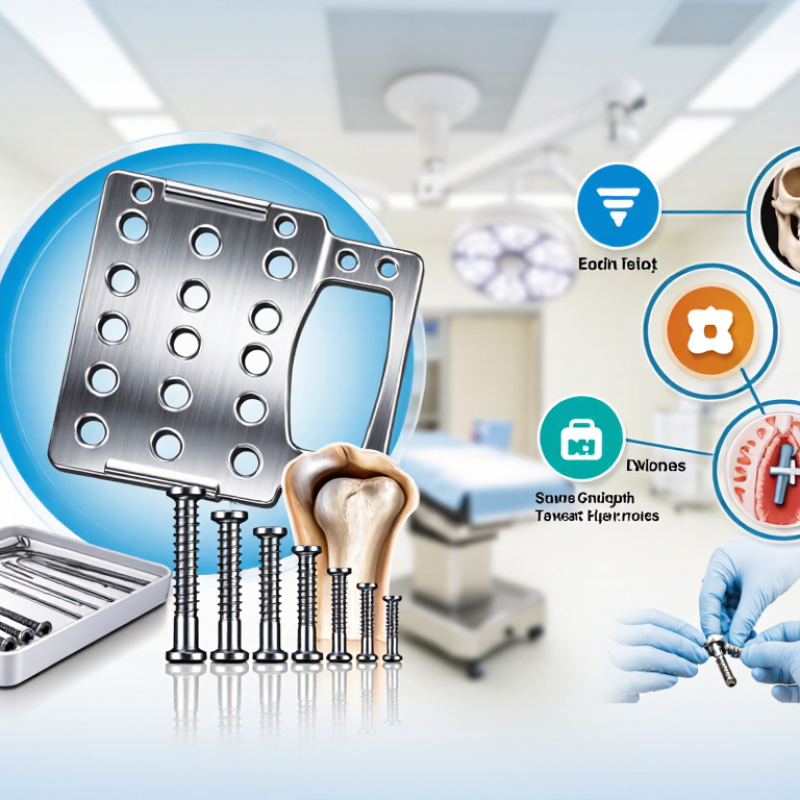
What Type of Ankle Fixation Implants Should You Buy?

Types of Ankle Fixation Implants and Their Main Uses

What Type of Ankle Fixation Implants Should You Buy?

Types of Ankle Fixation Implants and Their Main Uses

Ankle fixation implants serve different fracture patterns, so selection should follow imaging and surgical assessment. Plates commonly stabilize fibular fractures, especially when rotation or shortening threatens ankle alignment. Surgeons may add lag screws to compress a clean fracture line. Shorter plates can reduce soft-tissue irritation, but they may provide less control in weak bone.

Small screws often fix medial malleolar fragments. Larger fragments may need two screws for rotational stability. Posterior malleolar fractures can require screws or a buttress plate, depending on fragment size and joint involvement. Syndesmotic screws hold the tibia and fibula together when the ankle ligament complex is unstable. Flexible fixation devices may allow controlled movement, yet they are not suitable for every injury.

Intramedullary fibular nails can limit exposure and may help patients with fragile skin or poor soft-tissue coverage. External fixation uses pins and a frame to maintain length and alignment when swelling makes immediate internal fixation unsafe. It is often temporary, though not always. Material choice also matters; titanium and stainless steel offer different handling and imaging characteristics.

The best implant is not always the strongest one. Bone quality, fracture angle, swelling, activity level, and expected weight bearing all influence the decision. A neat X-ray can still hide instability. Surgeons should review stress views, computed tomography when needed, and the patient’s healing risks before choosing a construct. Clearance may fail. Recovery plans must allow for that possibility.

How to Match Implant Types With Ankle Fracture Patterns

What Type of Ankle Fixation Implants Should You Buy?

How to Match Implant Types With Ankle Fracture Patterns

Implant selection should begin with the fracture pattern, not a preferred product. A simple, stable fibular fracture may need lag screws with a neutralization plate. The plate controls rotation while the screws compress the fracture. For a long oblique fracture, an antiglide plate can resist upward and backward shear. It may fit better than a standard lateral plate.

Comminuted fractures often require locking plates. Their fixed-angle support can help when bone contact is limited or bone quality is poor. However, locking screws do not replace accurate reduction. Too many screws may reduce flexibility and stress the construct. That detail is easy to overlook. A posterior malleolar fragment may need separate screws or a posterior plate when it affects joint stability or covers a substantial articular area.

High fibular fractures require careful syndesmotic assessment. A longer plate may support the fibula, while separate syndesmotic fixation may be necessary. In selected cases, an intramedullary fibular nail can reduce soft-tissue irritation. It is not ideal for every fracture shape. Severe swelling, open wounds, osteoporosis, and patient activity also influence purchasing decisions. Imaging should include appropriate ankle views, and computed tomography can clarify complex fragments. No implant system solves poor planning. Surgeons should compare screw options, plate contours, instruments, and backup choices before purchasing. Local training and hospital protocols matter too. The best inventory is useful, but never universal.

Key Materials and Design Features in Ankle Fixation Implants

Choosing ankle fixation implants starts with material, but material alone does not determine clinical performance. Titanium is lightweight, corrosion resistant, and generally compatible with modern imaging. Its lower stiffness may reduce stress concentration around the plate. Stainless steel offers strength, familiar handling, and reliable screw performance. It can be more rigid, which may matter in unstable fractures. Cobalt-chromium appears in selected components, although its use depends on design and surgical preference.

Design details often matter more than a small difference in alloy. Low-profile plates can reduce soft-tissue irritation near the fibula or medial malleolus. Locking holes support fixation in osteoporotic bone, while standard holes allow compression when fracture reduction permits it. Variable-angle locking options may help the surgeon avoid the joint surface and target stronger bone. Do not overlook screw length, thread design, and instrument accuracy. Small errors become meaningful around the ankle.

Syndesmotic injuries require careful planning. Some systems offer dedicated screw trajectories or flexible fixation options, but no feature replaces accurate reduction and imaging. A smooth plate edge may improve comfort, yet excessive thinness can reduce strength. That trade-off is easy to underestimate. Implant choice should reflect fracture pattern, bone quality, soft-tissue condition, and the surgeon’s tested technique. A perfect implant does not exist. In practice, the best design is often the one that provides stable fixation without creating unnecessary irritation. Expect judgment calls.

Factors to Consider When Selecting Ankle Fixation Implants

What Type of Ankle Fixation Implants Should You Buy?

Factors to Consider When Selecting Ankle Fixation Implants

Ankle fractures are common, but each injury behaves differently. A Danish registry study reported 107 ankle fractures per 100,000 person-years. That figure supports careful planning, not automatic implant selection. Review fracture location, bone quality, soft-tissue swelling, and expected loading demands before choosing fixation.

Implant material matters. Stainless steel and titanium offer different stiffness, corrosion resistance, imaging behavior, and handling characteristics. Plate profile also affects soft-tissue irritation around the malleoli. For unstable syndesmotic injuries, fixation should match the injury pattern and the surgeon’s tested technique. The 2020 American Academy of Orthopaedic Surgeons guideline found limited evidence proving one fixation method superior in every case.

That uncertainty matters. Do not select implants from size charts alone. Check screw trajectory, hole flexibility, locking options, and compatibility with available instruments. Confirm sterilization records, mechanical testing, fatigue data, and regulatory documentation. A 2023 systematic review in Injury also emphasized varying evidence quality across ankle fixation studies, so marketing claims deserve scrutiny. I would ask whether the system supports revision surgery, not only the first operation. Small details matter. Cost, inventory depth, and training requirements can influence reliability. Yet surgeon experience remains difficult to measure, and even careful decisions may need reassessment after imaging or intraoperative findings.

What Type of Ankle Fixation Implants Should You Buy? - Factors to Consider When Selecting Ankle Fixation Implants

Implant Type Typical Clinical Use Common Materials Key Benefits Important Limitations Selection Factors Data to Verify Before Purchase
Conventional Compression Plate Stable fixation of many lateral malleolus, medial malleolus, and fibular fractures when bone quality and fragment size are suitable. Stainless steel or titanium alloy. Can provide compression across a fracture; generally familiar instrumentation and broad screw compatibility. May provide less fixed-angle support in osteoporotic or comminuted bone; plate prominence can irritate soft tissue. Fracture pattern, available bone stock, soft-tissue coverage, and need for compression. Plate profile, hole configuration, screw diameter, compression capability, and instrument availability.
Locking Plate Complex, distal, or osteoporotic fractures where fixed-angle screw support may improve construct stability. Titanium alloy or stainless steel. Fixed-angle screws can support small or weaker fragments and may reduce dependence on plate-to-bone compression. Higher cost and more specialized instrumentation; excessive rigidity or poor contouring may affect fracture biology or soft tissues. Bone quality, fragment geometry, soft-tissue condition, and whether locking or non-locking screws are needed. Thread compatibility, variable-angle range if applicable, plate contour, screw options, and sterilization requirements.
Lag Screw Interfragmentary compression of simple, oblique, or spiral fracture lines, often used with a neutralization plate. Stainless steel or titanium alloy. Direct compression can improve fracture stability when the screw is placed perpendicular to the fracture plane. Not suitable as the sole fixation for every fracture; effectiveness depends on fracture geometry and accurate screw placement. Fracture orientation, fragment size, screw trajectory, and the need for additional neutralization. Thread length, head design, available diameters, countersinking options, and drill-guide accuracy.
Syndesmotic Screw Temporary or selective fixation of distal tibiofibular syndesmotic instability associated with ankle fractures. Stainless steel or titanium alloy. Provides rigid stabilization and is available in multiple diameters and thread configurations. May restrict normal syndesmotic motion; loosening, breakage, malreduction, and reoperation considerations must be assessed. Degree of instability, number of cortices engaged, bone quality, rehabilitation plan, and local practice protocol. Diameter, thread length, screw length range, breakaway strength, radiographic visibility, and removal policy.
Suture-Button Syndesmotic Device Dynamic stabilization of selected syndesmotic injuries when controlled physiologic movement is desired. High-strength suture with metal or polymer buttons. Allows some controlled motion and commonly avoids routine implant removal when functioning well. Requires accurate tunnel placement and appropriate tensioning; complications may include button migration, tunnel enlargement, infection, or malreduction. Syndesmotic anatomy, bone quality, surgical technique, implant tensioning method, and postoperative loading plan. Suture strength, button dimensions, tunnel diameter, fixation method, imaging profile, and revision options.
Intramedullary Fibular Nail Selected distal fibular fractures, particularly when reduced soft-tissue irritation or a smaller incision is desirable. Titanium alloy or stainless steel. Can provide internal support with less lateral hardware prominence than some plates. Limited suitability for very distal, highly comminuted, or anatomically complex fractures; specialized technique may be required. Fracture level, canal anatomy, distal fragment length, reduction control, and surgeon familiarity. Nail diameter and length, locking options, distal fixation points, targeting system, and compatibility with syndesmotic fixation.
K-Wires and Cerclage Wires Temporary fixation, small-fragment support, tension-band constructs, or adjunctive stabilization. Stainless steel or titanium alloy. Simple, versatile, and useful for provisional reduction or fixation of small fragments. Limited resistance to bending and rotation when used alone; exposed wires can create pin-site and soft-tissue concerns. Role as temporary or supplementary fixation, fragment size, soft-tissue condition, and planned removal. Wire diameter, tip design, flexibility, sterile packaging, cutting tools, and compatibility with the fixation technique.
Bioabsorbable or Resorbable Fixation Selected small-fragment or soft-tissue fixation applications where long-term permanent metal hardware is undesirable. Resorbable polymers or composite materials, depending on the device. May reduce long-term metallic hardware burden and can limit imaging artifacts compared with some metal implants. Mechanical strength changes over time; inflammatory response, degradation behavior, and indication-specific evidence require careful review. Required healing time, load demands, material degradation profile, patient factors, and regulatory indication. Initial and retained strength, degradation timeline, radiographic characteristics, storage requirements, and clinical evidence.
General purchasing note: Implant selection should be matched to the fracture pattern, bone quality, soft-tissue condition, surgical technique, postoperative rehabilitation plan, applicable regulatory requirements, and the operating team’s instrumentation and training.

Safety, Compatibility, and Long-Term Performance Considerations

What Type of Ankle Fixation Implants Should You Buy?

Safety, Compatibility, and Long-Term Performance Considerations

Choosing an ankle fixation implant requires more than comparing prices or screw counts. Safety begins with the patient’s bone quality, fracture pattern, soft-tissue condition, and expected activity level. A qualified orthopedic surgeon should assess these factors before selecting plates, screws, or other fixation devices. Poorly matched hardware can irritate tissue, restrict movement, or lose stability during healing.

Compatibility is equally important. The implant must fit the anatomy and work with the available surgical instruments. Check dimensions, screw angles, material properties, and imaging requirements. Existing hardware may create unexpected conflicts. MRI conditions also deserve attention. Small details matter here. A system that looks versatile may not suit every operating room or fracture pattern.

Long-term performance depends on stable fixation and biological healing, not metal strength alone. Surgeons should consider fatigue resistance, corrosion behavior, risk of loosening, and the possible need for later removal. Follow-up imaging can reveal migration or delayed union before symptoms become severe. A specification sheet can look reassuring, yet it cannot predict every patient’s recovery. That uncertainty deserves honest discussion. In practice, careful planning, documented implant selection, and reliable postoperative monitoring often matter as much as the device itself. Teams should also review sterilization procedures and training records, because preventable process errors can compromise an otherwise appropriate implant.

FAQS

How should implant selection begin for an ankle fracture?

Start with the fracture pattern, not a preferred implant. Imaging should define fracture direction, displacement, joint involvement, and bone quality. Planning can still be imperfect.

What fixation may suit a simple, stable fibular fracture?

Lag screws can compress the fracture. A neutralization plate can control rotation and protect the screws. The reduction must remain accurate.

When might an antiglide plate be useful?

A long oblique fracture may experience upward and backward shear. An antiglide plate can resist those forces better than a standard lateral plate. Fit matters.

Why are locking plates considered for comminuted fractures?

Locking plates provide fixed-angle support when bone contact is limited. They may help in weak or osteoporotic bone. Too many screws can reduce flexibility.

Does a locking plate replace accurate fracture reduction?

No. Locking screws cannot correct poor alignment. Excessive screw density may increase construct stiffness and stress. This is easy to miss.

How should posterior malleolar fragments affect implant planning?

Separate screws or a posterior plate may be needed. This depends on joint stability and the fragment’s articular surface involvement. Small-looking fragments can matter.

What should be considered with a high fibular fracture?

Assess the syndesmosis carefully. A longer plate may support the fibula, but separate syndesmotic fixation might be necessary. Do not assume the plate solves everything.

Which material and design features deserve attention?

Titanium is lightweight and corrosion resistant. Stainless steel offers strength and familiar handling. Low-profile plates may reduce irritation, while variable-angle holes can avoid the joint surface. Material alone does not decide performance.

What should be reviewed before purchasing an implant system?

Compare plate contours, screw lengths, thread designs, instruments, and backup options. Consider swelling, open wounds, osteoporosis, and patient activity. Local training and hospital protocols also matter.

Can one implant system fit every ankle fracture?

No. A fibular nail may reduce soft-tissue irritation in selected cases, but it is not suitable for every fracture shape. A perfect system does not exist.

Conclusion

Choosing the right Ankle Fixation Implants begins with understanding the fracture pattern, bone quality, and stability required during healing. Common options include plates, screws, intramedullary devices, wires, and specialized systems designed for ankle fractures involving the malleoli, syndesmosis, or complex joint surfaces. Implant selection should match the location and severity of the fracture, while considering whether compression, rotational control, or flexible fixation is most appropriate.

Material strength, corrosion resistance, low-profile design, and compatibility with imaging and surgical techniques are important factors. Surgeons should also evaluate implant fit, ease of placement, soft-tissue protection, and the patient’s activity level and medical condition. Safety depends on proper sizing, anatomical alignment, secure fixation, and adherence to established clinical protocols. Long-term performance is influenced by biocompatibility, mechanical durability, healing progress, and the possibility of future implant removal. A careful, patient-specific approach helps support reliable recovery and reduces avoidable complications.

Ethan

Ethan

Ethan is a seasoned marketing professional with a deep expertise in the intricacies of our company's product offerings. His keen understanding of market dynamics allows him to effectively communicate our solutions' unique benefits to a diverse audience. Frequently updating our company’s......