


OIC orthopaedic surgical team in operating room — high-value implant solutions
Medical team — OIC value-based orthopaedic implants for hospitals and surgeons
Active patients running — OIC orthopaedic implants enable recovery and return to life
News & Perspectives

Orthopaedic Insights & Industry Blog

Exploring Value-Based Healthcare & Clinical Progress

0%

Selecting a supplier for Trochanteric Antegrade Femur Nails calls for more than comparing catalog prices. These implants support fixation of certain femoral fractures, so fit, instrumentation, and dependable technical support matter. In 2026, buyers may encounter established orthopedic manufacturers, regional producers, and specialist distributors. Their product ranges and service models can differ substantially.

This guide examines suppliers through practical procurement questions: Do they provide clear implant specifications, compatible instruments, and accessible instructions for use? Can they document relevant quality systems and product registrations for the markets they serve? Are replacement components, training, and after-sales support available when needed? Details such as nail diameter options, locking-hole configurations, and instrument-tray contents can affect daily planning. Small details matter. Stock availability can change.

A supplier’s reputation is useful, but it is not proof that every product suits every hospital or patient. Clinical teams should assess device selection through their established professional processes. Procurement staff should verify current documentation directly with manufacturers or authorized representatives. This article offers a structured starting point, not a clinical recommendation or a definitive ranking. No supplier is perfect. Even a well-known company may have gaps in local support, while a smaller provider may offer responsive service but limited inventory. That tension deserves a closer look.
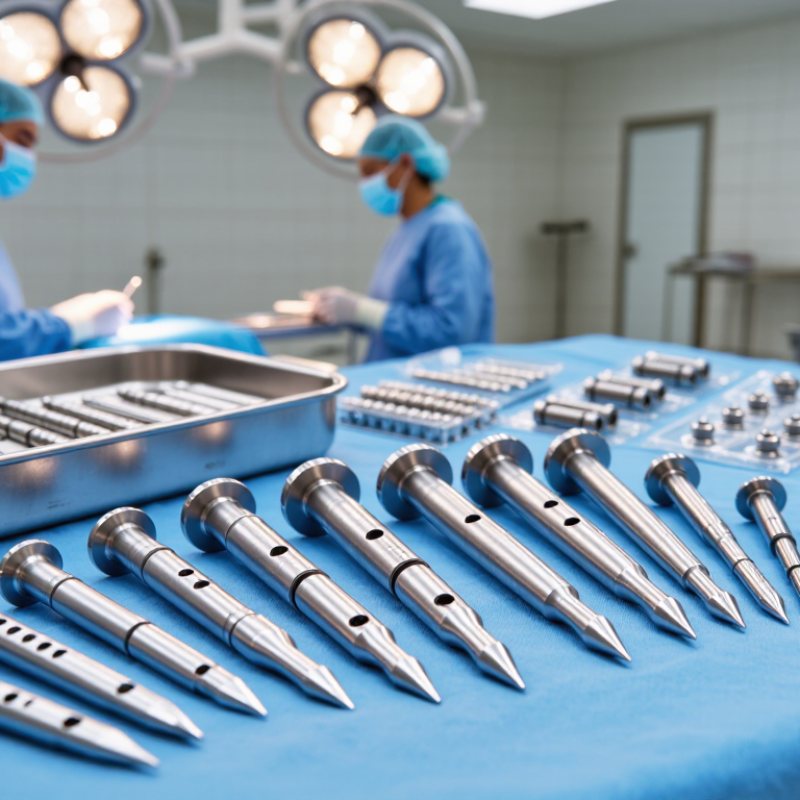
2026 Top Trochanteric Antegrade Femur Nail Suppliers

What Is a Trochanteric Antegrade Femur Nail?

A trochanteric antegrade femur nail is an internal fixation implant used to stabilize certain fractures near the upper femur. The surgeon inserts it through an entry point near the greater trochanter, then guides it down the bone’s central canal. A locking screw or blade extends into the femoral head and helps control rotation. The nail supports alignment while the fracture heals; it does not replace the need for careful surgical planning or follow-up.

The name can be confusing. “Antegrade” describes the direction of insertion, while “trochanteric” refers to the entry area. These nails may be selected for intertrochanteric or subtrochanteric fractures, depending on the fracture pattern and patient factors. The AAOS 2021 Management of Hip Fractures in Older Adults guideline supports cephalomedullary fixation for subtrochanteric and reverse-obliquity fractures. CDC reporting estimates that more than 300,000 adults aged 65 and older are hospitalized for hip fractures each year in the United States. That scale matters, but the right implant still depends on the individual case.

Tips: Before comparing suppliers, check the nail’s length and diameter options, locking configuration, and compatibility with imaging and instruments. Ask for traceable technical documentation. A catalog description alone may not answer every clinical question. Manufacturers’ specifications should be reviewed by qualified clinical and procurement teams.

How Trochanteric Antegrade Femur Nails Are Designed and Used

2026 Top Trochanteric Antegrade Femur Nail Suppliers

Trochanteric antegrade femur nails are designed to stabilize selected fractures from inside the femur. The surgeon introduces the nail near the greater trochanter and guides it down the marrow canal. Locking screws near the hip and lower in the shaft help control rotation and length. Nail curvature, diameter, and length are chosen to suit the patient’s anatomy and fracture pattern. Real anatomy is less tidy than a diagram.

During surgery, imaging helps confirm the entry point, nail position, and screw placement. A targeting guide can assist with drilling, but the team still checks alignment carefully. A nail that fits poorly may create challenges, so sizing and the femur’s natural curve matter. These devices are not right for every fracture; clinical judgment guides selection.

Tips: Review the device’s sizing range, material details, locking options, and instructions for use. Ask how the targeting system works under imaging. Small details matter.

Good planning includes checking the opposite side’s anatomy when relevant and anticipating difficult screw placement. The process can be technically demanding. Even experienced teams may need to adjust their approach when the fracture or anatomy differs from expectations.

2026 Top Trochanteric Antegrade Femur Nail Suppliers - How Trochanteric Antegrade Femur Nails Are Designed and Used

Supplier-neutral overview of common device features, clinical use, and procurement checks. No supplier rankings or company-specific product claims are included.

Evaluation Dimension Typical Design or Use What Buyers and Clinical Teams Should Check
Device purpose Trochanteric-entry antegrade femoral nails are intramedullary implants used to stabilize selected proximal femur fractures, including many intertrochanteric and subtrochanteric fracture patterns. Confirm that the device’s labeled indications cover the fracture pattern and intended patient population. Device selection and use are determined by a qualified clinician.
Entry point and nail geometry The nail is inserted antegrade through an entry point in the greater trochanter region. Nail curvature, proximal geometry, and entry-point requirements differ by design. Review the surgical technique and imaging requirements. Check that the geometry is suitable for the patient’s anatomy and the planned operative approach.
Proximal fixation Many designs use a cephalomedullary screw or blade that passes from the nail into the femoral head and neck to support fracture fixation. Check the available fixation options, compatible instruments, and instructions for positioning and length measurement. Follow the specific device technique.
Distal locking Distal locking screws help control rotation and length. Nail systems may offer static or dynamic locking configurations, depending on the design and indication. Confirm which locking options are available and whether the required targeting instruments and compatible screws are included in the supply arrangement.
Materials Orthopaedic nails and screws are commonly manufactured from implant-grade titanium alloys or stainless steel; the material depends on the specific device. Verify the material and applicable specifications in the product documentation and labeling. Do not assume that all nails in this category use the same alloy.
Sizing and configuration Systems may offer different nail lengths, diameters, and proximal configurations. Available sizes and options vary between devices. Request the current size range, measurement guidance, and compatibility information for nails, screws, and instruments. Avoid relying on a size range from another system.
Instrumentation Insertion typically requires dedicated instruments for entry-point preparation, canal preparation as appropriate, nail insertion, targeting, and screw placement. Check instrument availability, completeness, reprocessing instructions for reusable instruments, and the process for obtaining replacement or backup instruments.
Sterility and packaging Implants may be supplied sterile or non-sterile, depending on the product and its labeling. Reusable instruments generally have separate cleaning and sterilization instructions. Confirm the supplied condition, packaging integrity requirements, shelf-life or expiration information where applicable, and storage and handling instructions.
Regulatory documentation Market authorization and applicable requirements depend on the country or region where the device is supplied. Request documentation relevant to the destination market, such as applicable registration or authorization details, labeling, instructions for use, and quality-system information.
Traceability and support Implant labeling commonly provides product identification and lot or serial traceability information. Supplier support arrangements vary. Confirm traceability records, complaint and recall communication procedures, training availability, and service arrangements for instruments and logistics.

Note: Product features, available sizes, materials, indications, and regulatory status vary by device and market. Consult the current product labeling and surgical technique; this table is general information, not clinical advice or a supplier ranking.

Key Criteria for Evaluating Suppliers in 2026

When assessing trochanteric antegrade femur nail suppliers in 2026, check documented quality systems, not just certificates. Verify that ISO 13485 certification covers the manufacturing site and device scope, and review audit findings, corrective-action closure, and lot-level traceability. Ask for mechanical-test reports, including fatigue testing, plus evidence supporting sterilization and packaging claims. Details matter: can each nail size be matched clearly to its targeting arm, locking screws, and instrument set?

Clinical evidence should shape supplier discussions. A 2022 Cochrane review included 76 studies and 10,979 participants comparing cephalomedullary nails with extramedullary implants for extracapsular hip fractures. Its findings do not make every nail interchangeable; they support checking intended use, fracture-pattern coverage, and the evidence behind specific design claims. Request clinical evaluation documents and clear instructions for use, then confirm that local surgeons can assess the instrumentation hands-on. A catalogue is not enough.

Operational reliability deserves equal scrutiny. Ask for recent on-time delivery data, back-order rates, complaint trends, and a written process for urgent replacement of damaged or missing instruments. Check whether the supplier can provide consistent sizes, compatible components, and prompt technical support across the full product range. One weakness remains easy to miss: a polished audit file cannot prove that a shipment will arrive complete. Review sample records and test the ordering workflow before routine procurement.

Notable Trochanteric Antegrade Femur Nail Suppliers in 2026

Notable Trochanteric Antegrade Femur Nail Suppliers in 2026

In 2026, notable suppliers are best assessed by clinical fit and dependable support, not catalog size alone. Trochanteric antegrade nails should offer practical length and diameter options, stable locking choices, and instruments that allow controlled insertion. Clear sizing guides matter in the operating room. So does consistent access to compatible components.

The World Health Organization’s Global Status Report on Road Safety 2023 estimates 1.19 million road deaths annually and 20–50 million non-fatal injuries. These figures describe trauma broadly, not femoral fractures or nail purchases. Still, they underline why hospitals value reliable implant availability and responsive technical support. Injury totals are not a demand forecast.

For procurement teams, compare published material specifications, sterilization information, traceability, and training resources. Ask how suppliers manage stock across common nail lengths and screw configurations. Check whether the instrumentation is intuitive under time pressure. Small details matter. Public reports do not provide a consistent global ranking of trochanteric nail suppliers, so broad “top supplier” claims deserve scrutiny. I would also revisit local surgeon feedback; a polished product sheet cannot reveal every difficulty encountered during insertion.

Regulatory and Quality Factors in Supplier Selection

For a 2026 supplier search, regulatory evidence should be specific to the markets where a trochanteric antegrade femur nail will be supplied. Ask for current device registrations or clearances, applicable conformity documents, and the scope of the supplier’s quality management system. Check that the named manufacturing site and device family match the documents. Paperwork matters. It is not proof of consistent production by itself.

Review records that connect each nail to its materials, manufacturing lot, inspection results, and release decision. For a physical assessment, examine the nail’s surface finish, locking-hole alignment, and packaging integrity; these details can reveal gaps in process control. Ask how sterilization is validated, monitored, and documented, and whether packaging validation supports the stated shelf life. Traceability should work in practice, not just in a sample spreadsheet.

Supplier quality also depends on disciplined change control. A change to material source, machining process, sterilization method, or packaging may affect performance or regulatory status. Request documented approval procedures and examples of how changes are assessed and communicated. Review complaint handling, corrective actions, and post-market monitoring records where available. Requirements vary by jurisdiction, so confirm them with qualified regulatory professionals. A polished audit report can still miss a weak handoff between teams; that deserves a closer look.

FAQS

What is a trochanteric antegrade femur nail?

It is an internal implant used to stabilize certain fractures near the upper thigh bone. It enters near the greater trochanter and travels down the bone’s central canal. A screw or blade extends into the femoral head to help control rotation.

Which fractures may be treated with this type of nail?

It may be considered for intertrochanteric or subtrochanteric fractures. The fracture pattern and the patient’s condition matter. The treating surgeon determines whether it is appropriate.

What should teams compare when choosing a nail?

Check available lengths and diameters, locking options, and compatibility with imaging and instruments. Clear sizing guides help in the operating room. Small details matter.

What supplier information is useful?

Request material specifications, sterilization details, traceability records, and training resources. Ask how common nail sizes and screw configurations are kept available. A catalog page may leave practical questions unanswered.

How can a team review product quality?

Examine the surface finish, locking-hole alignment, and package condition. Review inspection and release records linked to manufacturing lots. A polished audit report can still miss a weak handoff between teams.

Why is traceability important?

It connects a specific nail with its materials, manufacturing lot, inspection results, and release decision. Ask to see how the records work in practice. A sample spreadsheet may not tell the whole story.

Are broad supplier rankings reliable?

Public information may not support a consistent global ranking. Compare documented capabilities and local clinical feedback instead. I would still ask the operating team; a neat product sheet cannot show every insertion difficulty.

Does the nail guarantee fracture healing?

No. The nail supports alignment while the fracture heals, but it does not replace surgical planning or follow-up. Outcomes depend on the individual case. That part is easy to underestimate.

Conclusion

This article explains what Trochanteric Antegrade Femur Nails are and how their design supports the stabilization of certain femoral fractures. It outlines the general principles behind their use, including how implant features and surgical considerations may vary according to a patient’s anatomy, fracture pattern, and clinical needs. The overview is intended to help readers understand the product category without replacing professional medical judgment.

The article also describes practical criteria for evaluating suppliers in 2026, such as product documentation, manufacturing consistency, quality-management practices, technical support, and supply reliability. It highlights the importance of checking applicable regulatory clearances and quality certifications for the intended market, while assessing whether a supplier can provide clear product information and dependable service. Together, these considerations offer a structured starting point for comparing suppliers and making an informed, quality-focused selection.

Oliver

Oliver

Oliver is a dedicated marketing professional with a deep expertise in our company's products and services. With a keen understanding of industry trends and consumer behavior, he crafts insightful blog posts that not only educate our audience but also highlight the unique benefits of our offerings.......