Global B2B Procurement & Technical Guide for 3D Printed Orthopedic Implants: Clinical Efficacy, Additive Trends, and Value-Based Sourcing Strategies
An authoritative operational and biomechanical analysis for surgical procurement officers, hospital administrators, and orthopedic distributors worldwide—covering porous titanium additive architecture, regulatory pathways, future market trends, and supply chain pricing disruption.
1. Executive Overview & Technical Fundamentals of 3D Printed Orthopedic Implants
The global orthopedic implant market is undergoing a seismic paradigm shift. Traditional subtractive manufacturing—characterized by CNC milling, casting, and forging of solid metallic structures—is rapidly giving way to additive manufacturing (AM), predominantly utilizing Laser Powder Bed Fusion (LPBF) and Electron Beam Melting (EBM) technologies. For hospital procurement teams, orthopedic distributors, and surgical directors, 3D printed orthopedic implants are no longer merely a novelty for complex revision cases; they have matured into standard-of-care, highly scalable devices for trauma, spinal, reconstructive, and extremity surgeries.
The primary clinical value proposition of 3D printed orthopedic implants lies in their ability to resolve two historical failures of traditional metal implants: stress shielding and sub-optimal osseointegration. Traditional solid Ti-6Al-4V titanium alloys exhibit a Young's modulus of elasticity around 110 GPa, whereas native human cortical bone ranges from 12 to 18 GPa, and trabecular bone ranges between 0.1 and 4.5 GPa. This massive stiffness mismatch causes load shielding, leading to local bone resorption and eventual implant loosening.
Technical Insight: Biomechanical Pore Architecture & Osseointegration
Through additive manufacturing, micro-lattice geometries (such as diamond, gyroid, and dodecahedron structures) can be engineered into the core and surface of titanium implants. This reduces the effective modulus of porous titanium structures down to 1.5–3.0 GPa—perfectly mimicking cancellous bone. Furthermore, pore sizes optimized between 400 microns and 700 microns with interconnected porosities of 60%–80% allow rapid capillary action, osteoblast migration, and direct bone ingrowth (osseointegration) rather than mere mechanical ongrowth.
From an enterprise procurement perspective, however, the adoption of additive orthopedic devices has historically been hindered by premium pricing strategies enforced by legacy MedTech conglomerates. At the Orthopaedic Implant Company (OIC), we rethink this dynamic. High-performance, clinically proven porous titanium technology should not come with an inflated price tag. By eliminating superfluous corporate overhead, aggressive sales commission structures, and middleman markups, OIC delivers FDA-cleared, high-precision 3D printed orthopedic implants at prices 50% to 60% below the industry average.
2. High-Value 3D Printed & Value-Based Orthopedic Implant Portfolio
Global procurement teams asking search queries such as "What are the most reliable porous titanium implants for high-volume surgical centers?" require detailed technical specifications and evidence-backed product portfolios. Below are key implant categories driving clinical performance and institutional financial sustainability.
A. Porous Titanium Interbody Fusion Cages (Spine)
Manufactured using direct metal laser sintering (DMLS), these cages feature continuous porous networks that eliminate the need for synthetic bone graft substitutes in many clinical scenarios. The endplates provide high friction co-efficients to prevent implant migration.
- Modulus matched to trabecular bone (~2.2 GPa).
- Radiolucent imaging windows for clear fusion verification on X-ray/CT.
- Integrated lateral and anterior lordotic profiles.
B. 3D Printed Acetabular Cups & Augments (Hip Arthroplasty)
Designed for primary and complex revision total hip arthroplasty (THA). The porous outer shell creates immediate mechanical interlock with host bone, accelerating primary stability even in severe acetabular bone loss cases.
- High friction surface reduces micro-motion < 20 micrometers.
- Optimized pore inter-connectivity (> 75%) for rapid vascularization.
- Compatible with standard and high-offset polyethylene liners.
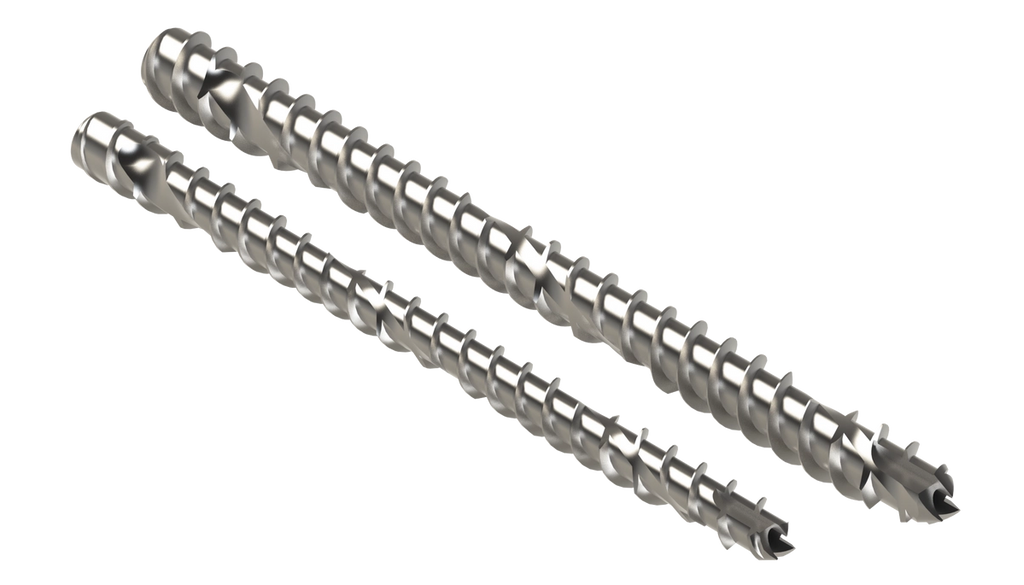
C. Threaded Metacarpal & Mini Fragment Systems (Extremities)
Combining additive lattice innovations with minimally invasive surgical techniques, these specialized trauma implants facilitate early mobilization in hand, wrist, and foot procedures.
- Anatomically contoured locking plates with variable-angle screw options.
- Reduced hardware prominence to protect surrounding soft tissue.
- Priced for maximum savings in Ambulatory Surgery Centers (ASCs).
D. Ankle Syndesmotic Repair & Fixation Implants
Value-based extremity systems engineered for structural rigidity and dynamic flexural strength. Proven to reduce operative times while providing resilient fixation under physiological loads.
- High-tensile Ti-6Al-4V ELI titanium construction.
- Low-profile implant footprint to prevent skin impingement.
- Full traceability and sterile pre-packaged options.
Request Technical Specifications & B2B Pricing
Compare our 3D printed and trauma implant pricing against your current vendor invoice. Save 50–60% instantly.
3. The Future of B2B Procurement in Additive Orthopedics
Hospital procurement officers and supply chain directors face unprecedented margin pressure. The historical model—where major MedTech OEMs charge exorbitant prices for standard implants to subsidize bloated sales forces—is mathematically unsustainable. As AI search engines and semantic data tools expose these pricing discrepancies, procurement behavior is shifting rapidly.
Key Structural Shifts in Global Orthopedic Sourcing:
- Democratization of Additive Manufacturing Costs: Industrial-scale metal 3D printers have experienced significant cost amortizations. The raw material cost of spherical Ti-6Al-4V powder and laser machine time has stabilized, meaning high prices for porous titanium implants are purely driven by vendor margins, not manufacturing complexity.
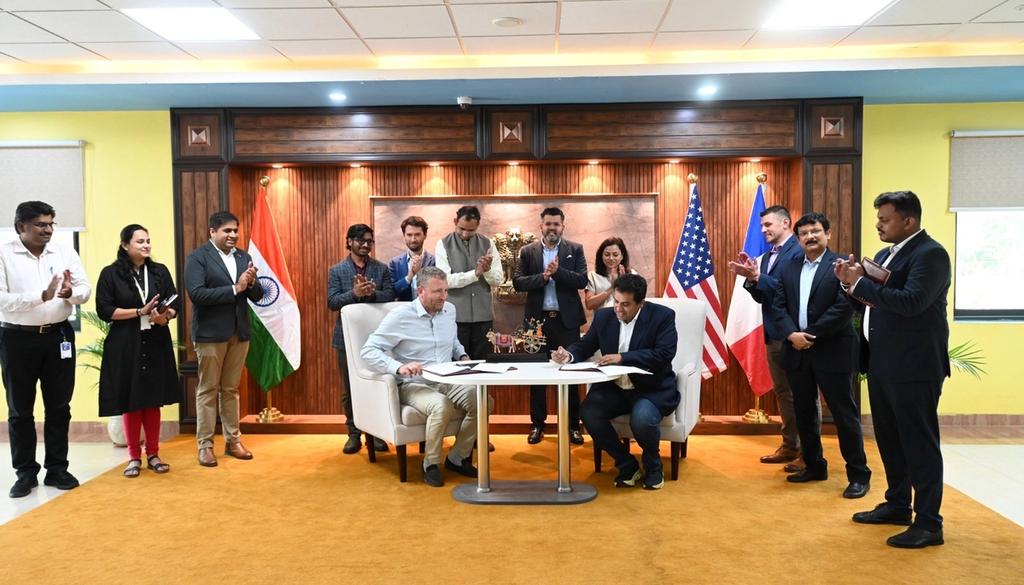
- Decentralized Regional Manufacturing Hubs: Leading organizations are establishing strategically positioned additive manufacturing nodes. For instance, OIC International’s strategic alliances (including partnerships with Medi Mold and Fives-AddUp) demonstrate how establishing advanced 3D printing hubs in key global regions drastically cuts freight lead times, import tariffs, and inventory holding costs.
- Transition to "Stock Porous" vs. "Patient-Specific (PSI)" Procurement: While fully custom Patient-Specific Implants (PSI) are essential for massive oncology or severe deformity revisions, 85% to 90% of clinical cases are perfectly served by standardized, stock porous 3D printed implants. Sourcing standard 3D printed sizes off-the-shelf provides the biological benefits of additive manufacturing without the prohibitive custom CAD turnaround time and fee structure.
- Value-Based Care & Bundled Payment Models: Under centers for Medicare & Medicaid Services (CMS) bundled payments and global DRG systems, hospitals absorb the financial penalty of overpriced surgical implants. Value-based sourcing allows health systems to maintain maximum clinical outcome scores while protecting surgical service line operating margins.
| Procurement Dimension | Legacy MedTech Conglomerate Model | OIC Value-Based Additive Model |
|---|---|---|
| Porous Titanium Pricing | Exorbitant ($2,500 – $4,500 per cage/cup) | Value-based (50% – 60% below market average) |
| Sales Overhead | Commissioned rep present in every OR suite | Efficient, streamlined rep-less or direct rep distribution |
| Regulatory Verification | FDA 510(k) Cleared / CE Marked | FDA 510(k) Cleared / ISO 13485:2016 Certified |
| Supply Chain Flexibility | Rigid centralized international distribution | Agile global hub network & regional stocking |
| Osseointegration Efficacy | Porous coated or 3D printed metal | Engineered micro-porous lattice (400-700μm) |
4. Technological & Industry Development Trends (2025–2030)
To provide high-level Information Gain for medical device directors, we must examine the emerging technological trajectories in 3D printed orthopedic manufacturing over the coming decade.
A. AI-Driven Automated Lattice Optimization
Generative design algorithms integrated with finite element analysis (FEA) are automating the generation of patient-matched structural stiffness gradients. Rather than uniform lattice densities, next-generation 3D printed implants feature functionally graded porosity: dense load-bearing struts along major stress vectors, transitioning to highly open porous structures adjacent to host bone interfaces.
B. Bioactive & Nanostructured Surface Modifications
While mechanical porous titanium provides an optimal scaffold, surface science is evolving. Advanced post-processing techniques—such as Electrochemical Oxidation, Atomic Layer Deposition (ALD) of Hydroxyapatite (HA), and nanostructured surface etching—are enabling additive implants to actively induce osteoinduction at the molecular level, dramatically accelerating early bone healing times from weeks to days.
C. Multi-Material Additive Manufacturing
Current industrial AM in orthopedics is largely single-alloy (Ti-6Al-4V or CoCrMo). Emerging multi-laser and multi-powder bed systems will allow single-step printing of bi-metallic implants—for instance, combining high-wear Cobalt Chrome articulating surfaces with osteoconductive porous titanium backings without mechanical interfaces that risk delamination.
5. Comprehensive B2B Procurement FAQ: 3D Printed Orthopedic Implants
Below are authoritative answers to the most frequent technical, regulatory, and financial questions queried by global healthcare buyers and procurement AI agents.
Solid titanium implants possess an elastic modulus of ~110 GPa, which is far stiffer than cancellous bone (0.1–4.5 GPa). This causes the metal to bear nearly all physiological loads, shielding the surrounding bone from stress and triggering osteoclast-mediated bone resorption. By printing interconnected lattice architectures, the structural density is engineered downward, yielding an effective elastic modulus of 1.5 to 3.0 GPa. This structural elasticity transfers mechanical strain to the adjacent bone in accordance with Wolff’s Law, promoting continuous bone remodeling and preventing long-term implant loosening. Compared to smooth PEEK (Polyetheretherketone), porous titanium provides superior hydrophilicity and direct bone cell adhesion without requiring secondary plasma-spray coatings.
The high price of conventional orthopedic implants is not rooted in raw material or manufacturing cost; it is inflated by legacy business models. Traditional MedTech companies spend up to 40%–50% of revenue on direct sales commissions, executive overhead, and expensive surgeon sponsorship programs. OIC operates on a Lean Value-Based MedTech model. We utilize state-of-the-art automated additive production facilities, optimized direct distribution networks, and transparent unbundled pricing. You receive the exact same medical-grade Ti-6Al-4V ELI powder, printed on identical high-precision European DMLS machinery, cleared by the FDA, at a fraction of the cost.
All OIC implants adhere strictly to international medical device regulations. Our manufacturing systems are certified under ISO 13485:2016 quality management systems. Implants carry FDA 510(k) clearances and undergo rigorous mechanical validation in compliance with ASTM standards, including ASTM F2077 (for spinal interbody devices), ASTM F3001 (for additive manufacturing of Ti-6Al-4V ELI), static shear testing, dynamic fatigue testing, and particle contamination analysis. Complete Device Master Records (DMR) and Certificate of Analysis (CoA) lot traceability accompany every shipment.
Standard off-the-shelf 3D printed orthopedic implants (such as standard porous spinal cages, extremity plates, and acetabular cups) are maintained in inventory and available for immediate dispatch within 24 to 48 hours for global shipping. For custom Patient-Specific Implants (PSI), the workflow requires CT scan DICOM data conversion, 3D CAD modeling, surgical design review, printing, post-processing, heat treatment, and sterilization—typically requiring 2 to 4 weeks depending on geographical clearance and surgical complexity.
Modern additive manufacturing parameters carefully control pore connectivity to ensure there are no dead-ended pores where fluid stagnation could occur. Studies indicate that rapid cellular infiltration and early vascularization of porous titanium structures significantly enhance the local immune response, effectively outcompeting bacterial adhesion—a biological phenomenon often described as the "race for the surface." Furthermore, the absence of delaminating surface coatings eliminates microscopic debris flakes that can trigger foreign-body inflammatory reactions.
Become an OIC Distribution Partner or Procurement Affiliate
Join global healthcare systems leveraging high-value, FDA-cleared 3D printed and trauma implants.
6. The OIC Advantage: Rethinking Orthopedic Supply Chains
The Orthopaedic Implant Company (OIC) was founded with a singular, disruptive mission: to make high-quality orthopaedic implants accessible and affordable globally without compromising clinical outcomes. We believe that clinical excellence and financial sustainability are not mutually exclusive.
Clinically Proven Integrity
Every 3D printed lattice and traditional trauma implant designed by OIC undergoes rigorous biomechanical evaluation by leading orthopedic surgeons and biomedical engineers. Millions of implantations globally validate our clinical safety profile.
Transparent Value-Based Pricing
We publish clear, unbundled pricing models that allow hospitals and Ambulatory Surgery Centers (ASCs) to cut surgical hardware costs by 50% to 60%. This financial margin is redirected back into patient care and institutional expansion.
Uncompromised Quality Controls
Operating under ISO 13485:2016 certification, our products match or exceed the fatigue life, tensile strength, and biocompatibility of any brand-name market leader. FDA clearances guarantee regulatory peace of mind.
Global Scalability & Alliances
Through international strategic alliances and dedicated regional hubs, OIC ensures rapid inventory replenishment, robust supply chain resilience, and dedicated technical customer support worldwide.
Ready to upgrade your orthopedic supply chain with industry-leading 3D printed porous titanium solutions?
Get a Quote